Double-entry books for an electrical contractor, in the same program as the estimate: payables, purchase orders, progress billing, payroll, banking and compliance.
Dashboard, Chart of Accounts, General Journal, Contacts, Accounts Payable, Purchase Orders, Accounts Receivable, T&M Invoices, Progress Billing, Imported Invoices, Projects, Lien Waivers, Payroll, Job Costing, Inventory, Fixed Assets, Tools & Equipment, Bank Accounts and Reports. Each person sees the areas their access level opens.
Import Invoice (PDF) reads the vendor, invoice number, date, total and lines from a vendor’s PDF invoice into a bill, and attaches the PDF. It reads the text in the PDF; it does not do OCR. A PDF that is only a scanned picture, with no text in it, will not read — it can still be attached to a bill entered by hand. Distributor invoice CSV files import too.
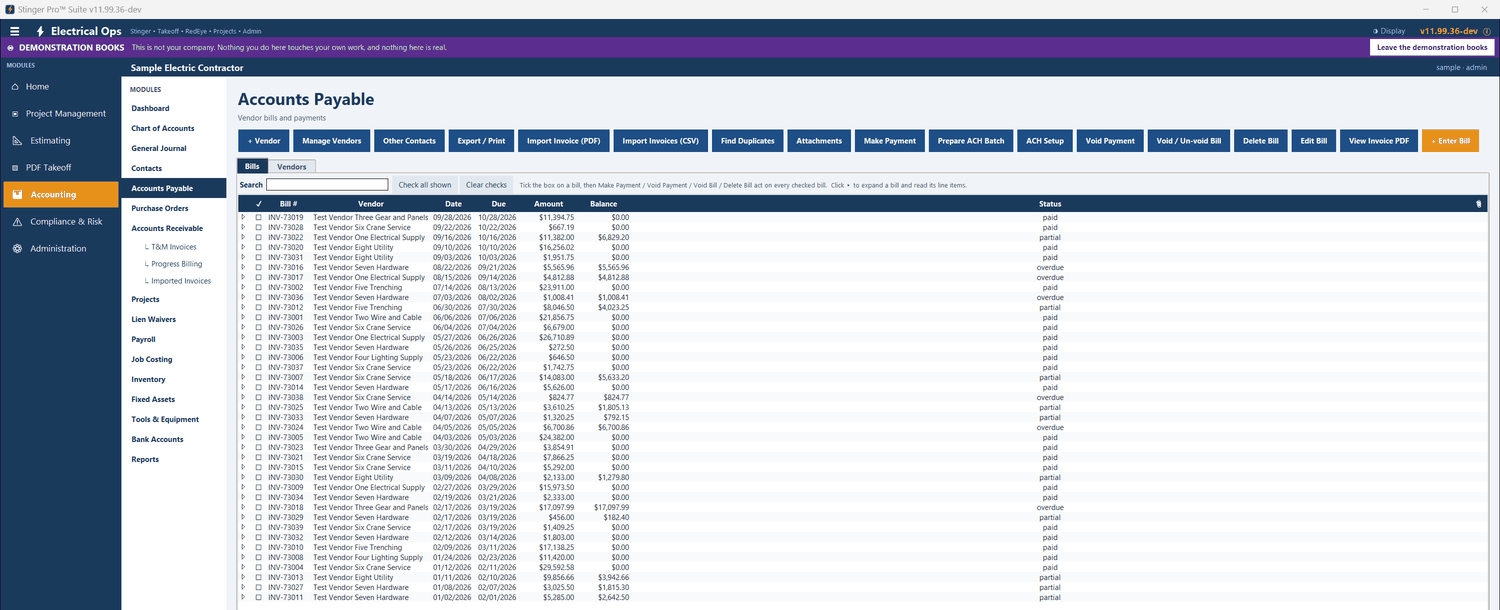
Make Payment pays the checked bills, one payment per vendor, by check, ACH, wire or card. Checks print three to a page with two remittance stubs, numbered in sequence with a warning on a gap or a reused number.
Import from job quotes… builds a purchase order’s lines from an estimate’s approved vendor quotes and can attach the quote PDF. Bills are tied to their PO, and a PO billed over its amount is flagged.
AIA-style applications for payment, G702 and G703, against the schedule of values, with retainage on completed work and on stored material. Enter the percent complete or the dollars; each fills the other. A posted application is locked.
Lien waivers: the four California statutory forms — conditional and unconditional, progress and final — and your own saved templates for other states. A waiver linked to the job fills its amount from the latest application.
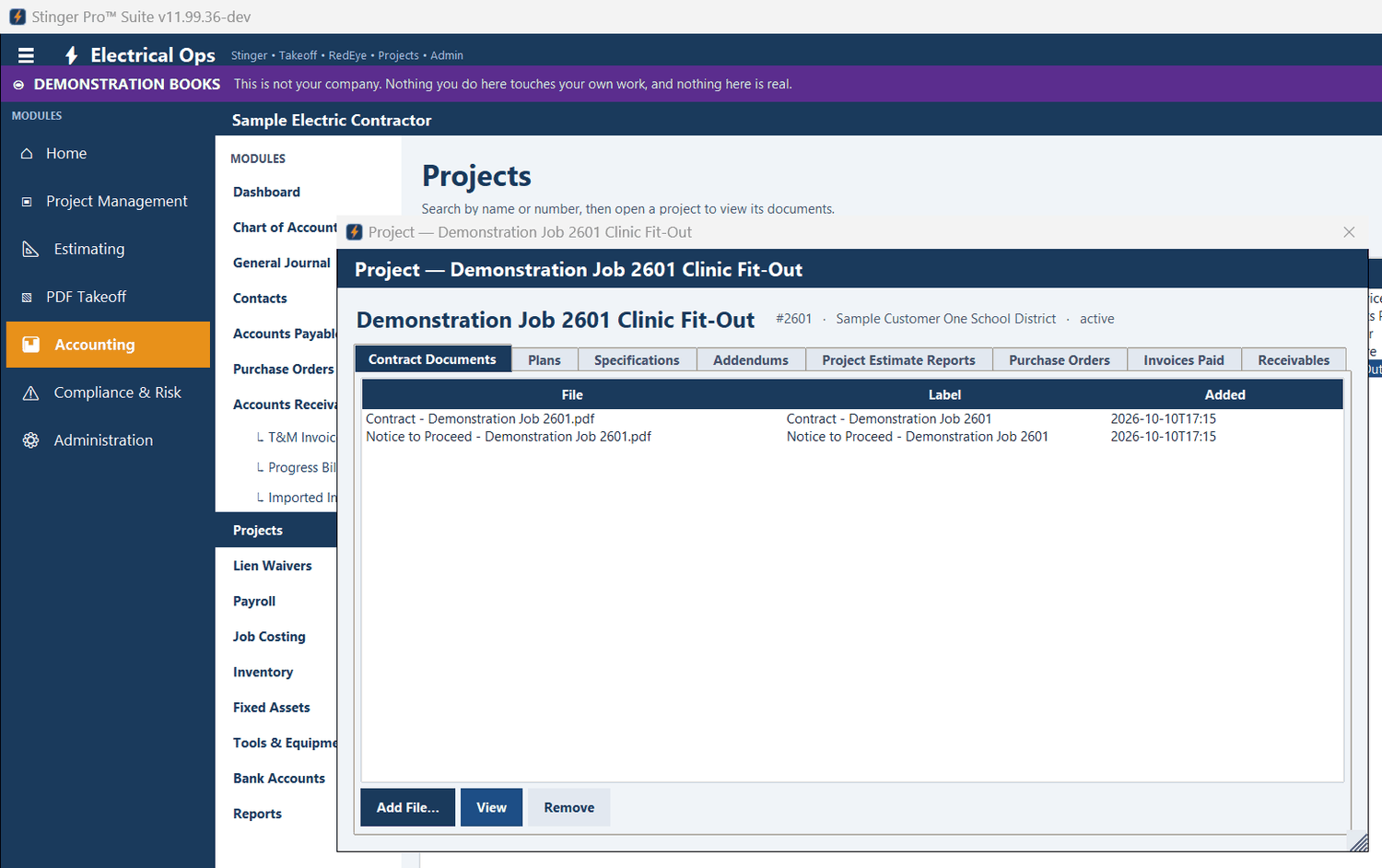
Each project files its own documents in eight tabs: contract documents, plans, specifications, addendums, project estimate reports, purchase orders, invoices paid and receivables. Import Project Estimate files the estimate’s reports here.
Most contractors run payroll through a payroll service, and the program is built around that: Import Payroll Journal (ADP / QuickBooks) brings the service’s journal into the books, or Record Payroll Entry keys one in. Certified payroll is made in the program, job by job, on Form WH-347 with its Statement of Compliance, and posts to the job’s cost.
Import Statement reads a Chase statement PDF and checks it against the statement’s own section totals and its beginning and ending balances before anything is used. Other banks’ transactions import as CSV. Bank rules code imported lines, and can be learned from the bank register of your previous books. Reconcile sets the register beside the statement.
ACH: the program writes a NACHA file to upload on your bank’s site — vendor payments, and collections from customers who have signed an authorization. It checks routing numbers and balances the file before writing it, and it never connects to a bank.
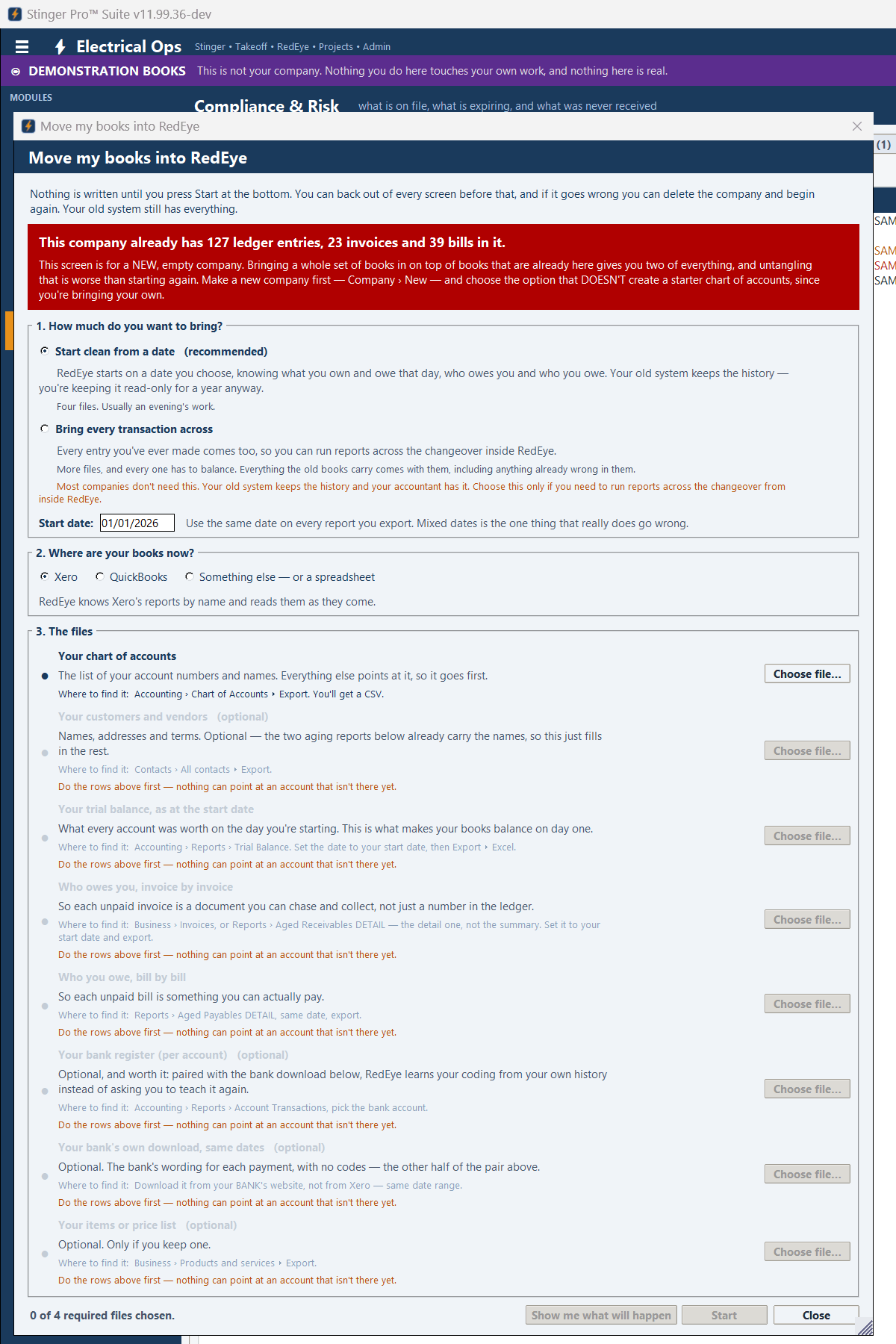
From Xero, QuickBooks or a spreadsheet: start clean from a date, or bring every transaction across. The files go in a set order — chart, contacts, trial balance or general ledger, receivables, payables, bank — and a trial balance that does not balance posts nothing. Do my books tie? checks the result.
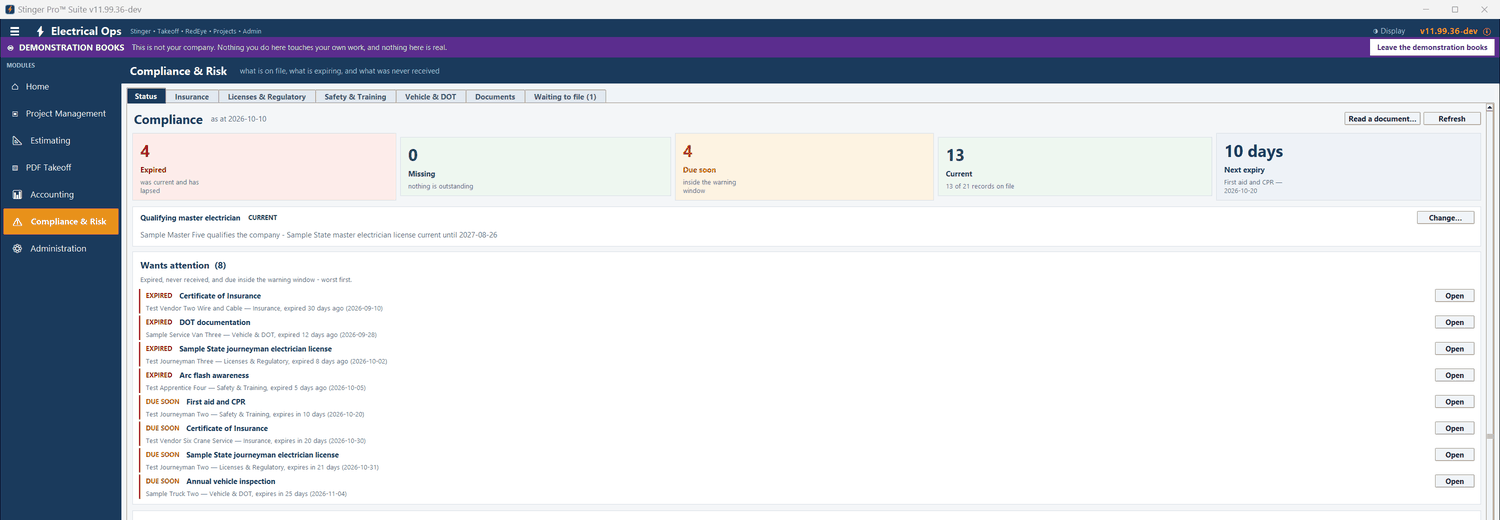
Certificates of insurance issued and received, policies and bonds, licenses, W-9s, safety training and vehicle records, with what has expired, what is due and what was never received. Read a document… takes the dates from an ACORD 25 certificate and other text PDFs.

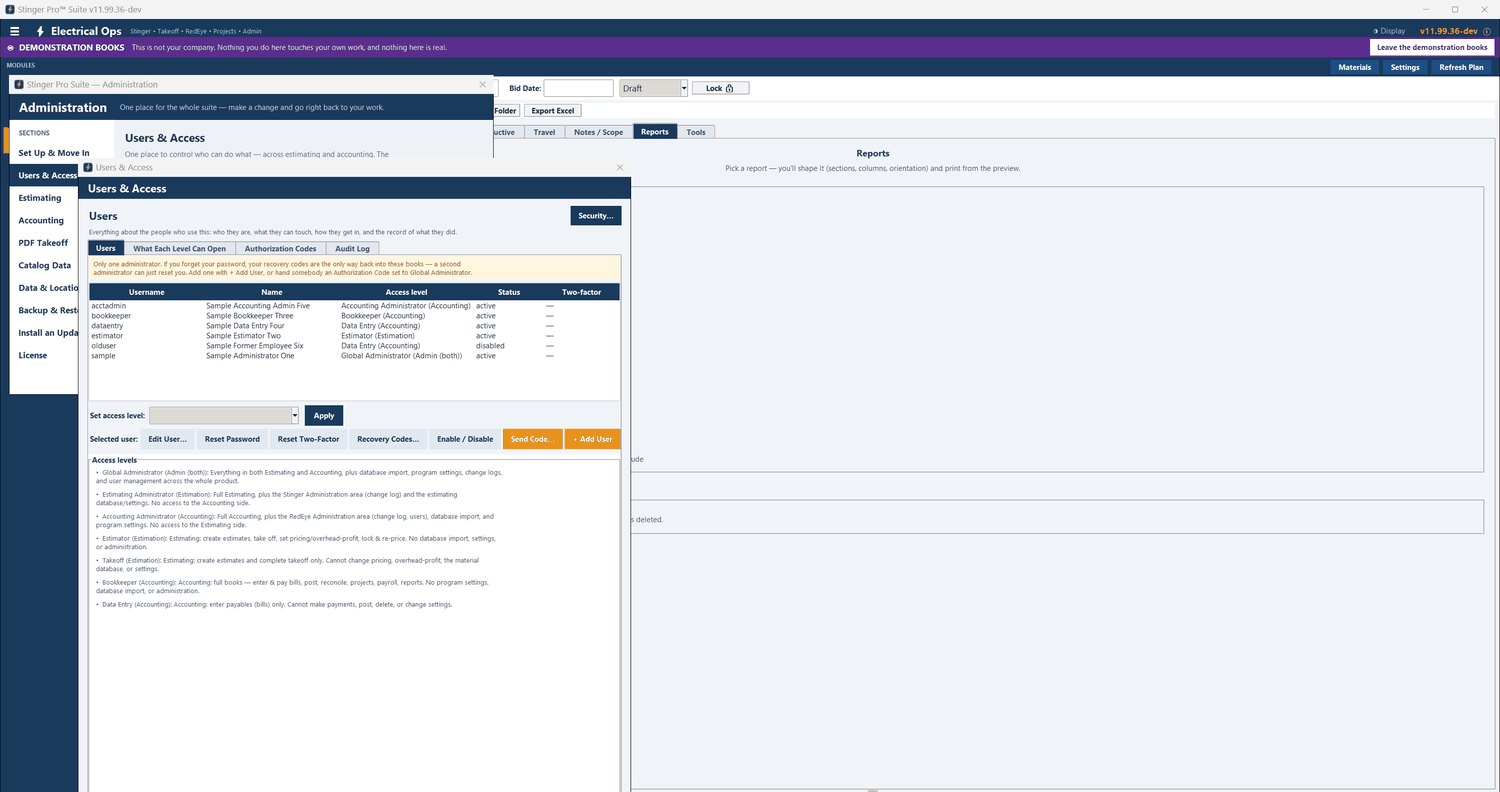
One list of users for estimating and accounting, each with an access level. A table says what each level may open, down to paying bills and voiding invoices; authorization codes let a new person set their own password; an audit log records the accounting changes. Two-factor sign-in works with a phone app or a YubiKey, offline.
Profit and loss, balance sheet, trial balance, agings, sales and use tax, on a cash or accrual basis, with divisions as columns. Saved reports, and every list, export to Excel, CSV or PDF.