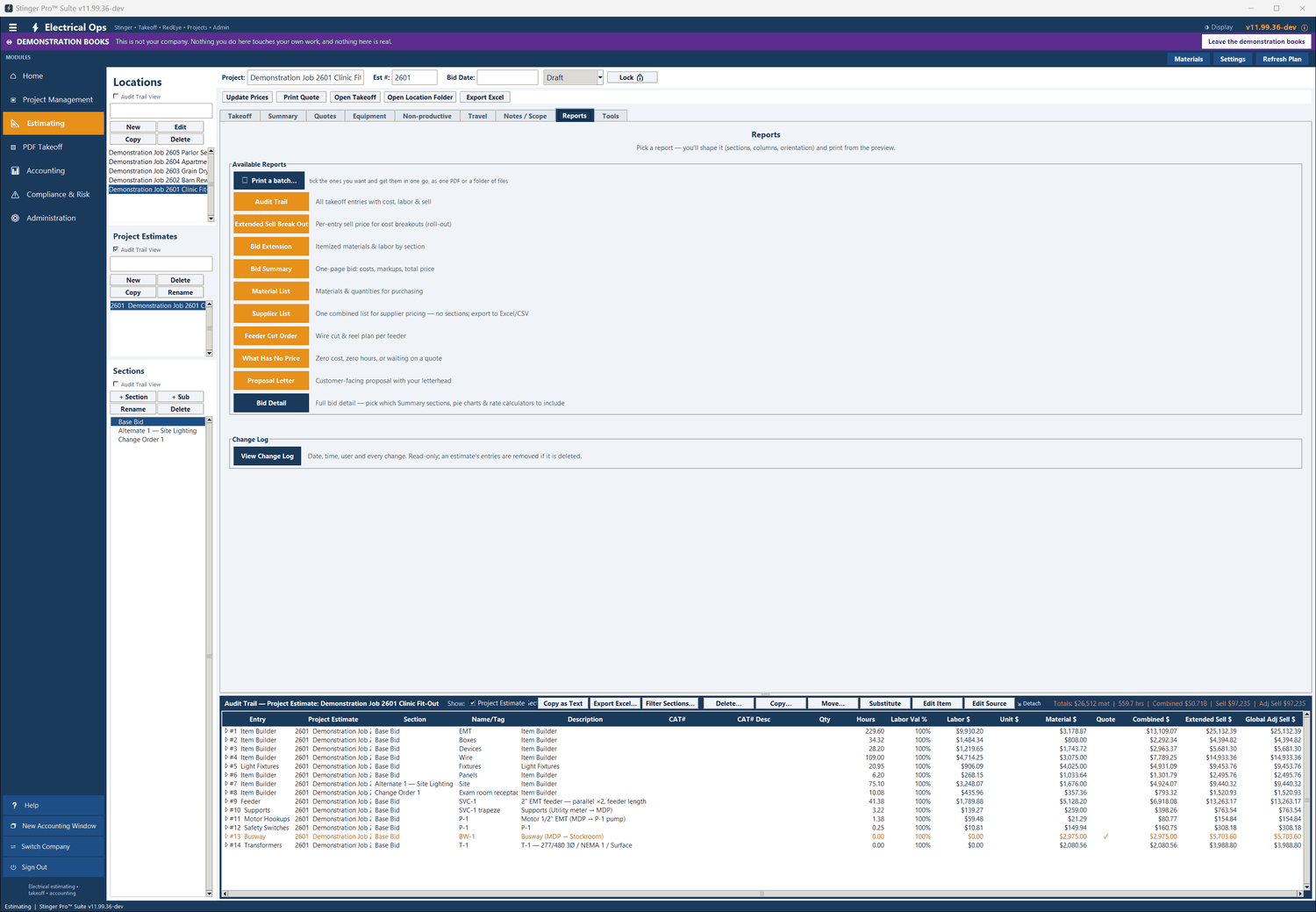
Takeoff modules turn a run, a fixture or a panel into priced material lines and labor hours, filed under the estimate’s sections. The summary carries them to a bid.
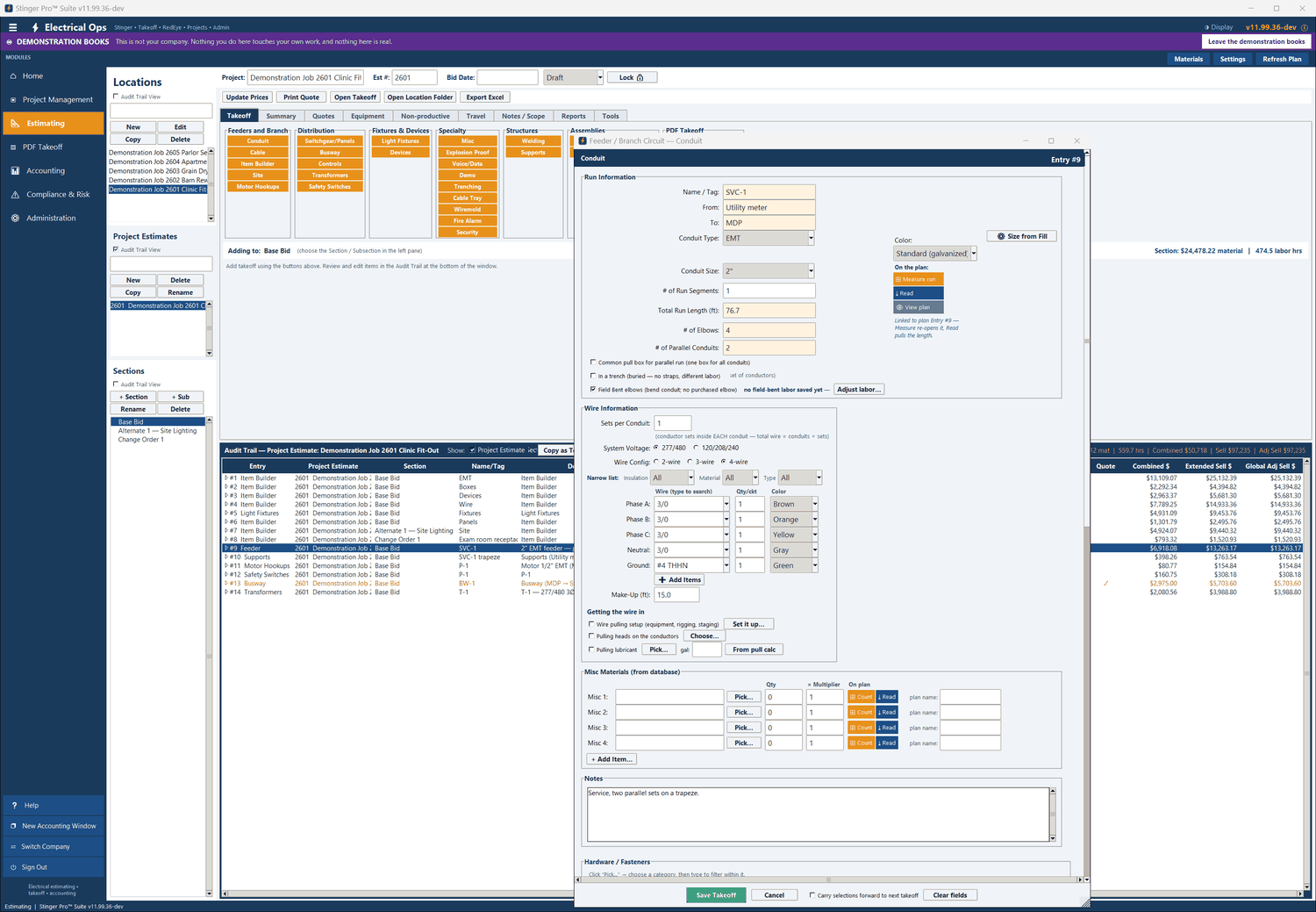
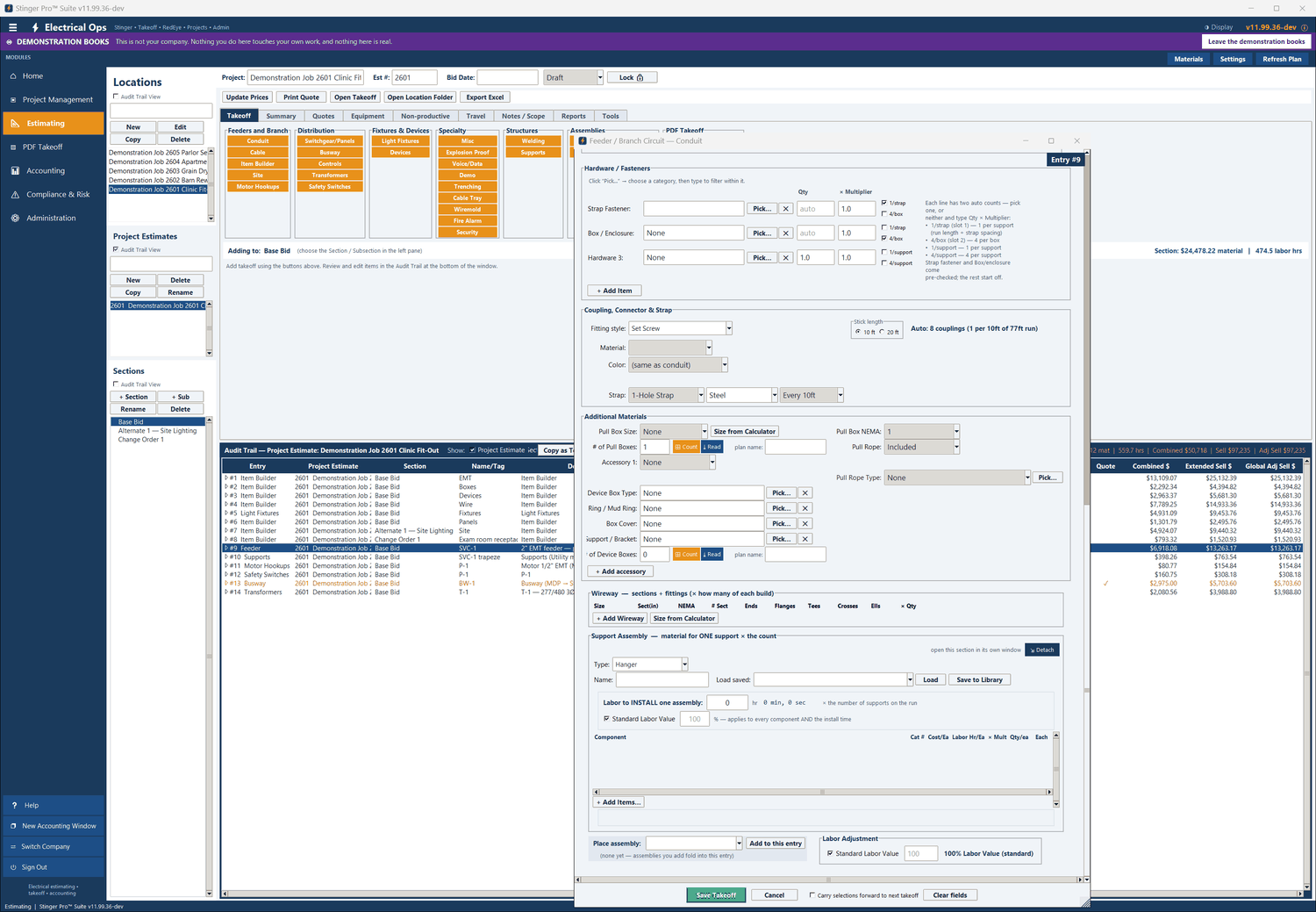
A Conduit entry carries the run, the conductors with their colors from the system voltage, and everything the run needs to be installed: couplings by stick length, connectors, straps by spacing, pull boxes, field-bent elbows, the wire-pulling setup, pulling heads and lubricant. The modules, tied to the plan.
Labor and burden, material, quotes and tax, equipment, non-productive labor and travel, overhead, profit and bond, to the grand total and the quoted price. Two charts: the cost by takeoff module, and each part’s share of the total price. Crew duration is worked for crews of two to ten.
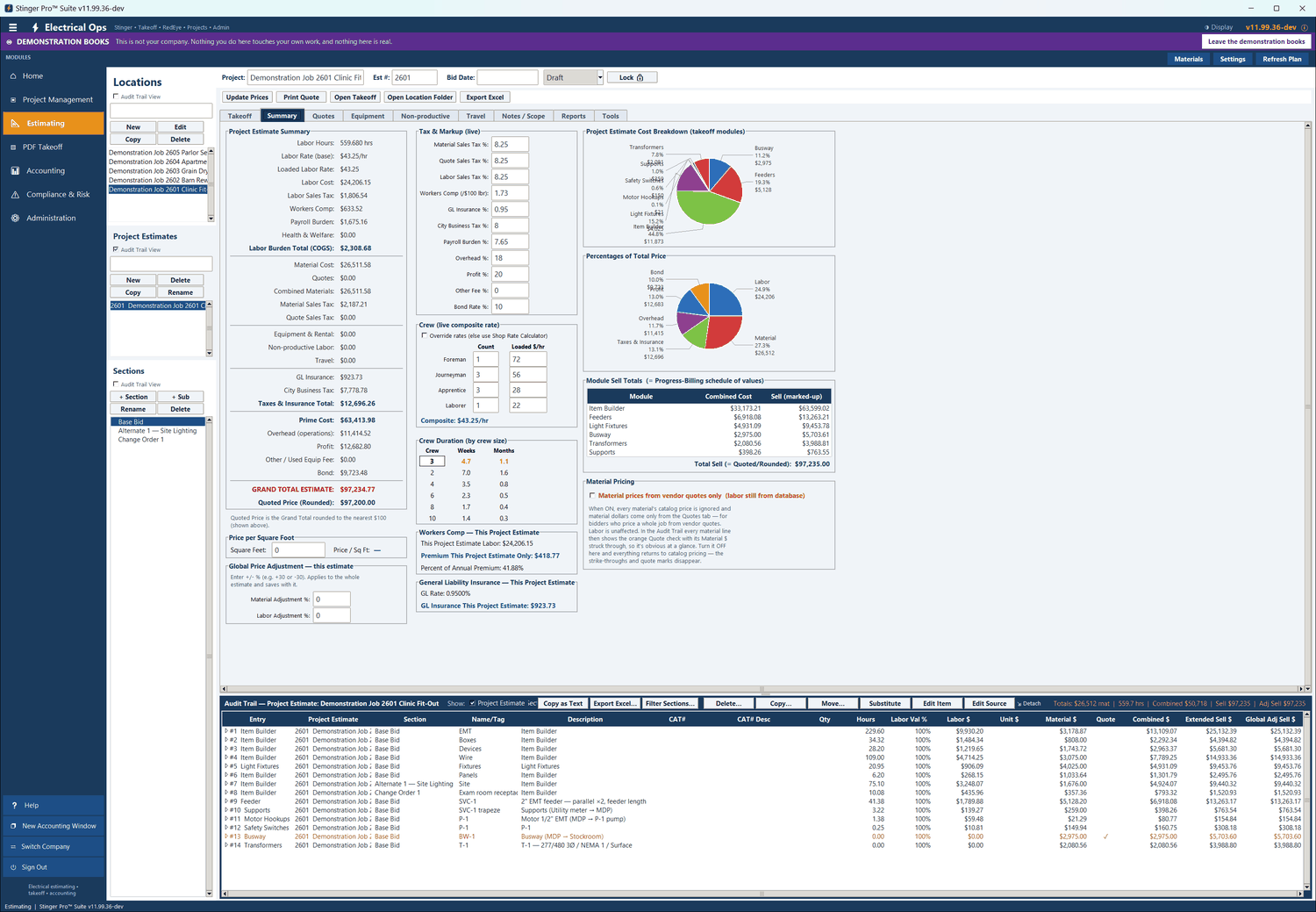
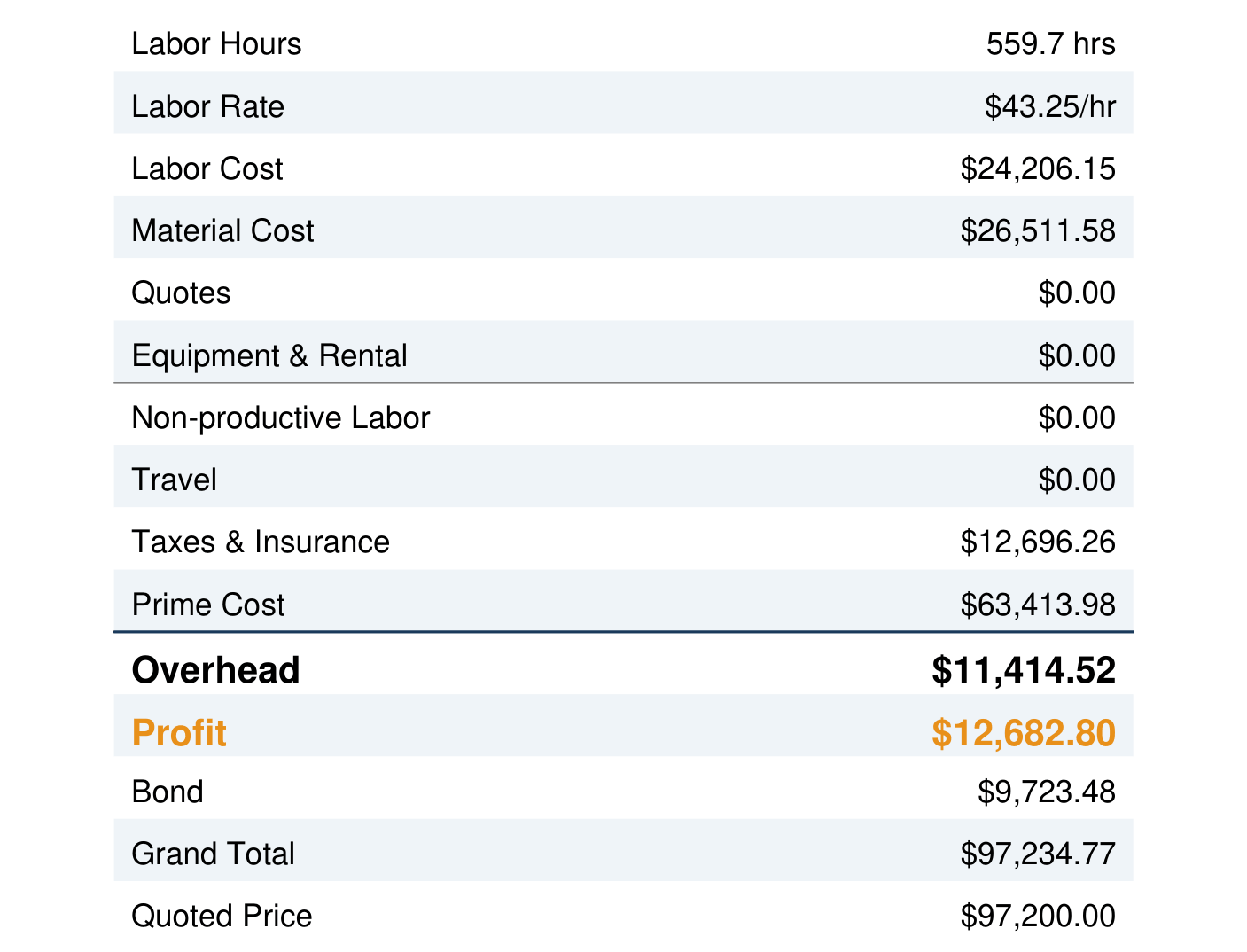
One method: overhead is a percentage of the prime cost — loaded labor, material, quotes, sales tax, equipment, non-productive labor and travel, with general liability insurance and the city business tax. Profit and the other fee are percentages on the same base. General liability, the city business tax and the bond are each a percentage of the final total, so the total is solved for them rather than added on. The Summary shows gross margin and markup side by side.
The rates are set on the Summary’s Tax & Markup panel or in Settings. A Global Price Adjustment raises or lowers the material or labor of one estimate by a percentage, and saves with it.
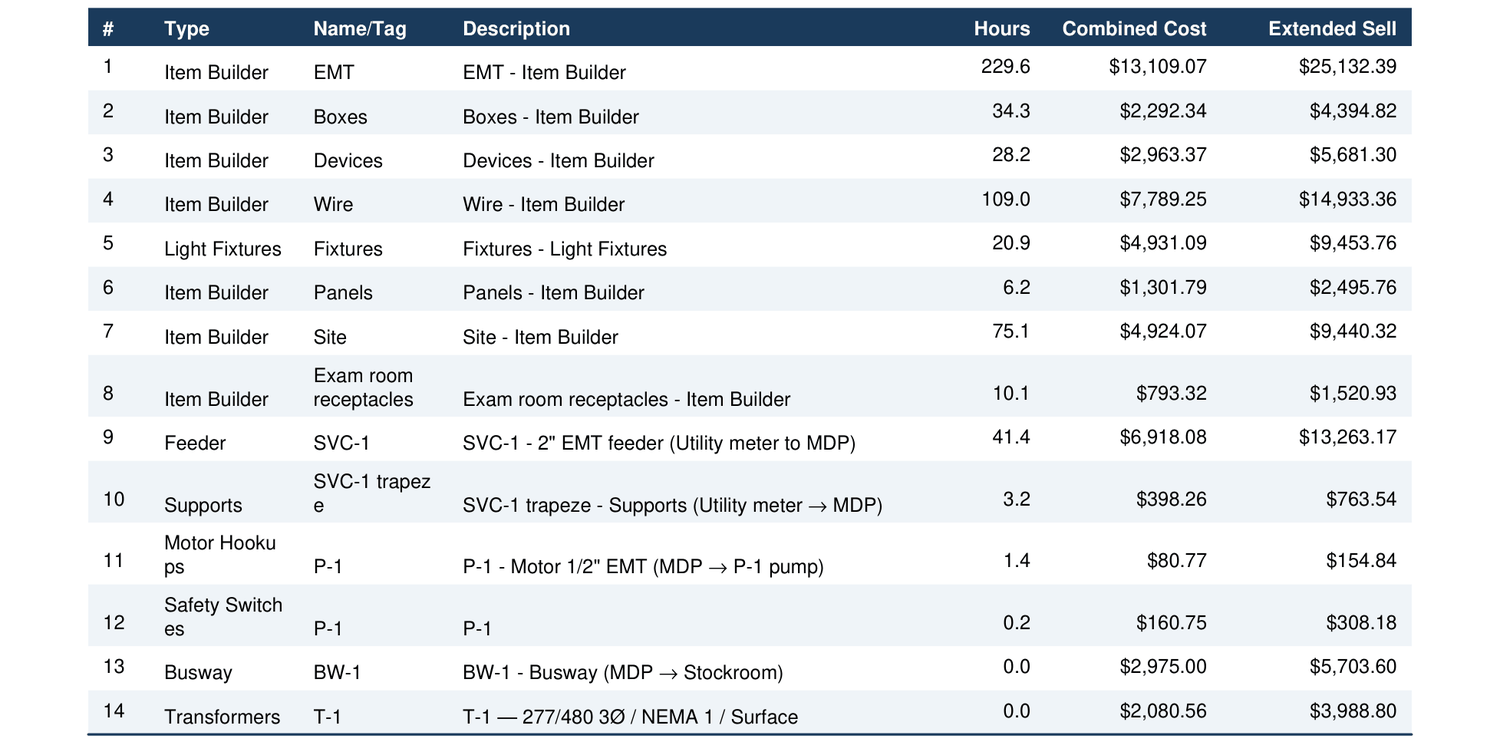
Every entry, with its hours, labor, material, quote, combined cost and extended sell, under the estimate. Edit Source reopens the module an entry came from. Substitute rebuilds selected entries with a different wiring method. Move…, Copy… and Delete… work on the entries checked; Filter Sections… narrows it; ⇲ Detach opens it in its own window.
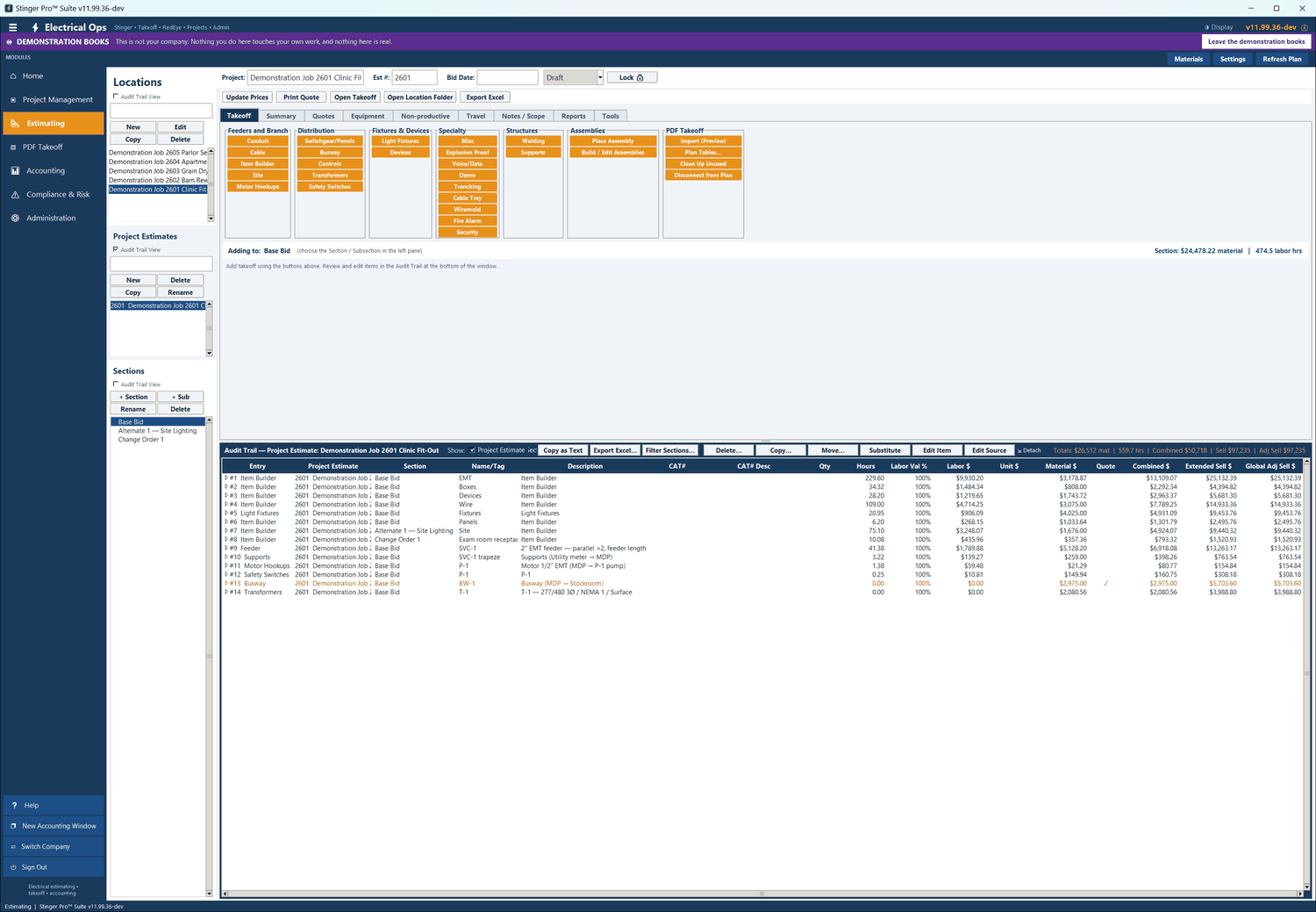
Export Excel… writes every column, with a Problem column that marks a line whose part disagrees with the catalog or has no catalog number. The Audit Trail report prints in a rollout with every column, each entry closed with its totals and the job closed with a job total. Extended Sell Break Out prints each entry’s share of the bid, adding up to the bid total, for pricing a scope change.
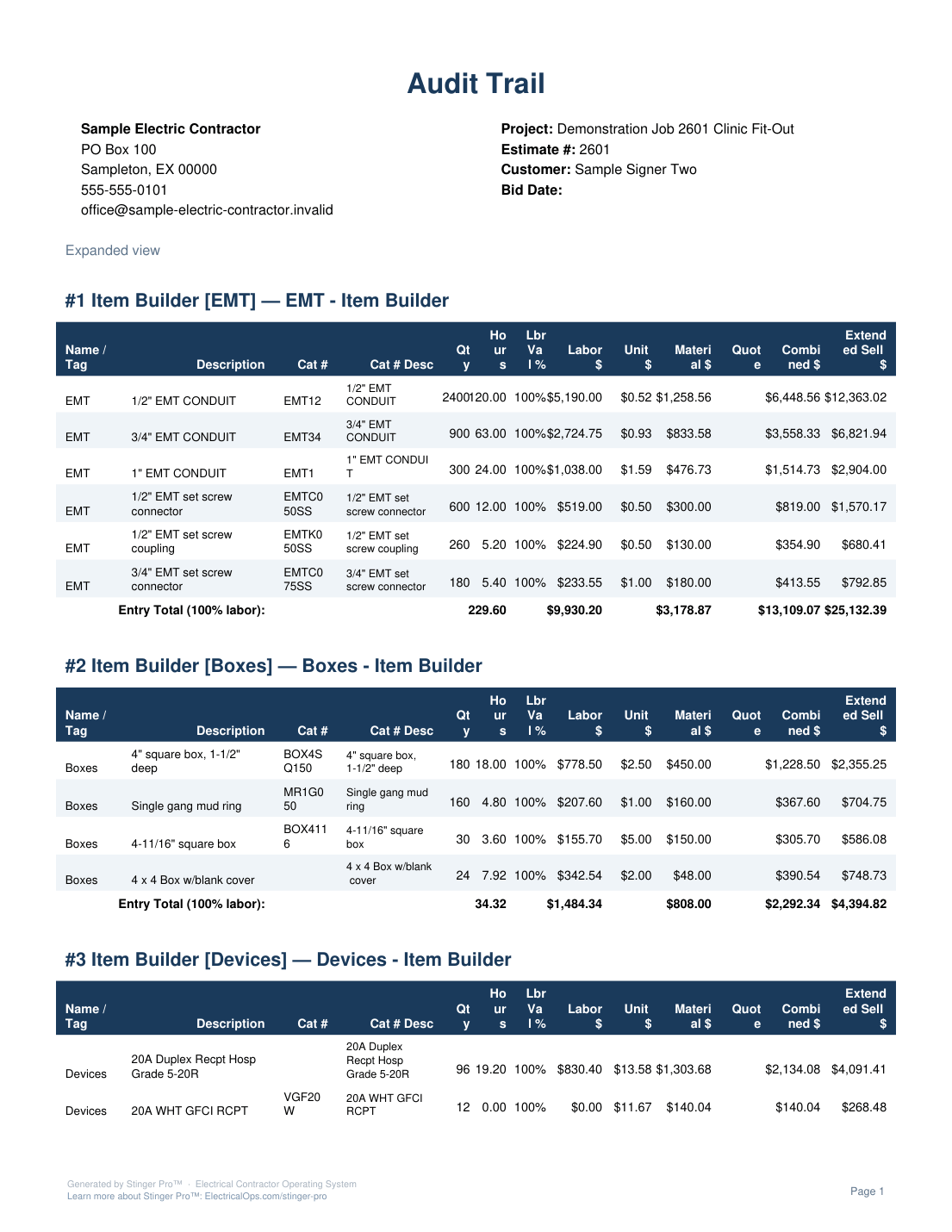
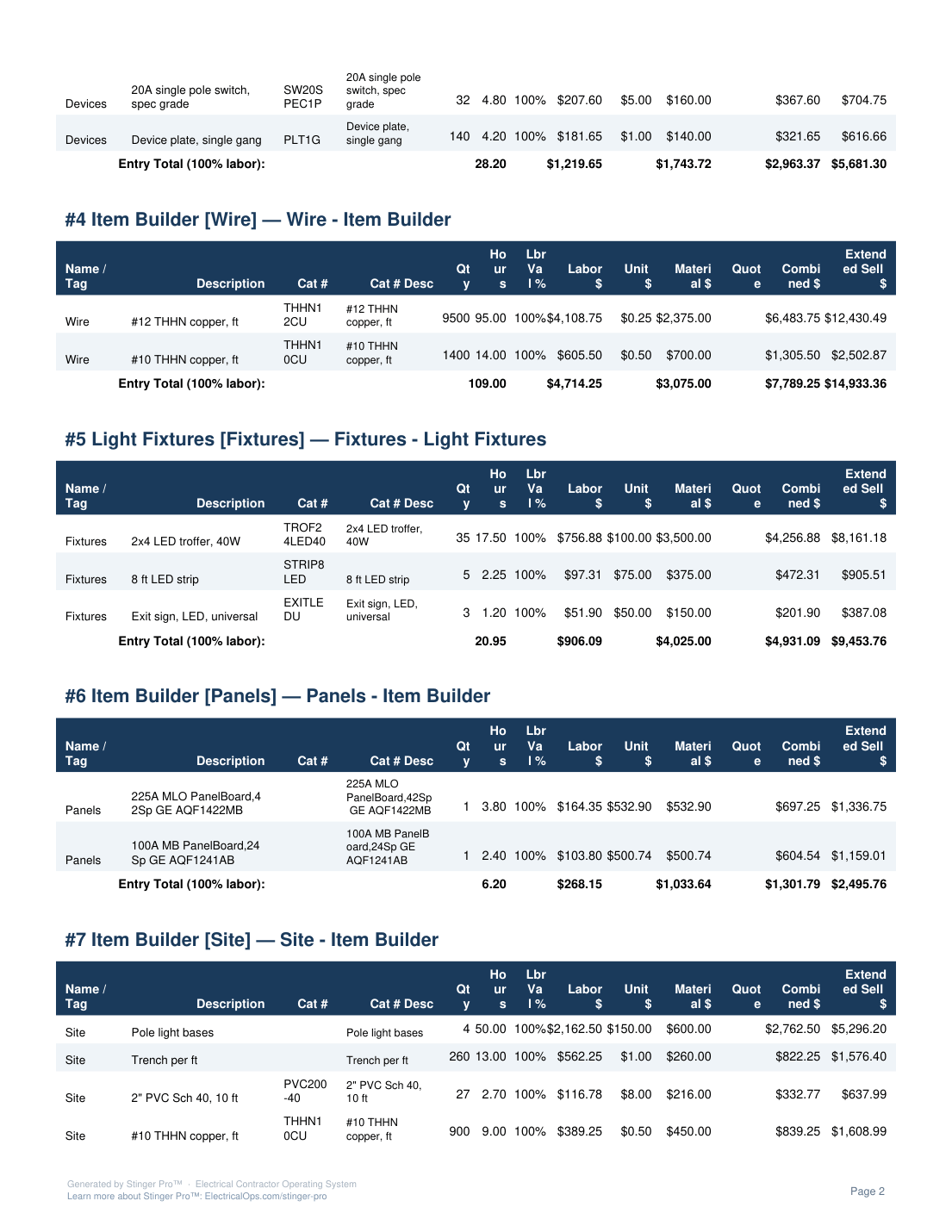
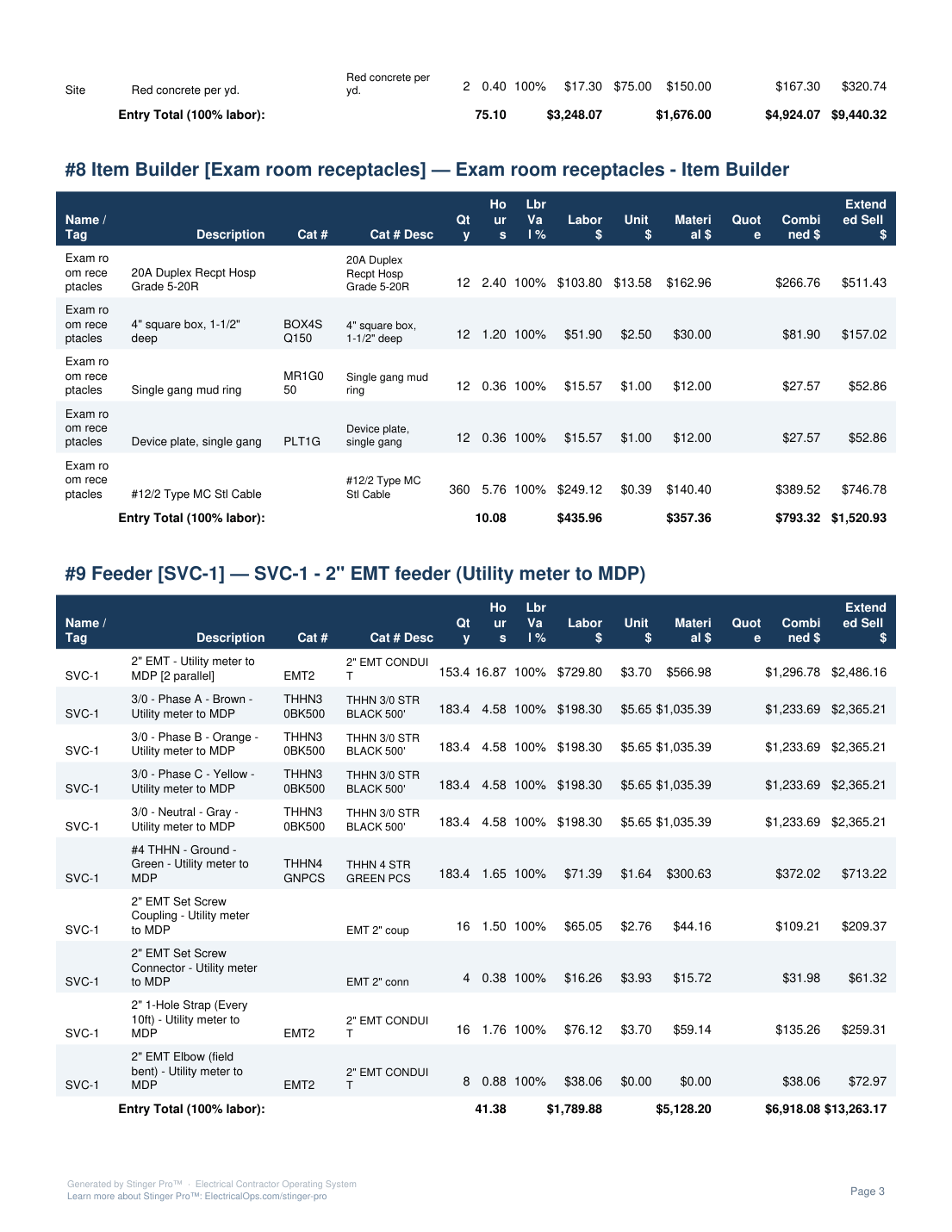
The Audit Trail rollout the program printed for 2601: each entry’s lines with catalog number, quantity, hours, labor, unit price, material, combined cost and extended sell, and the entry’s total.
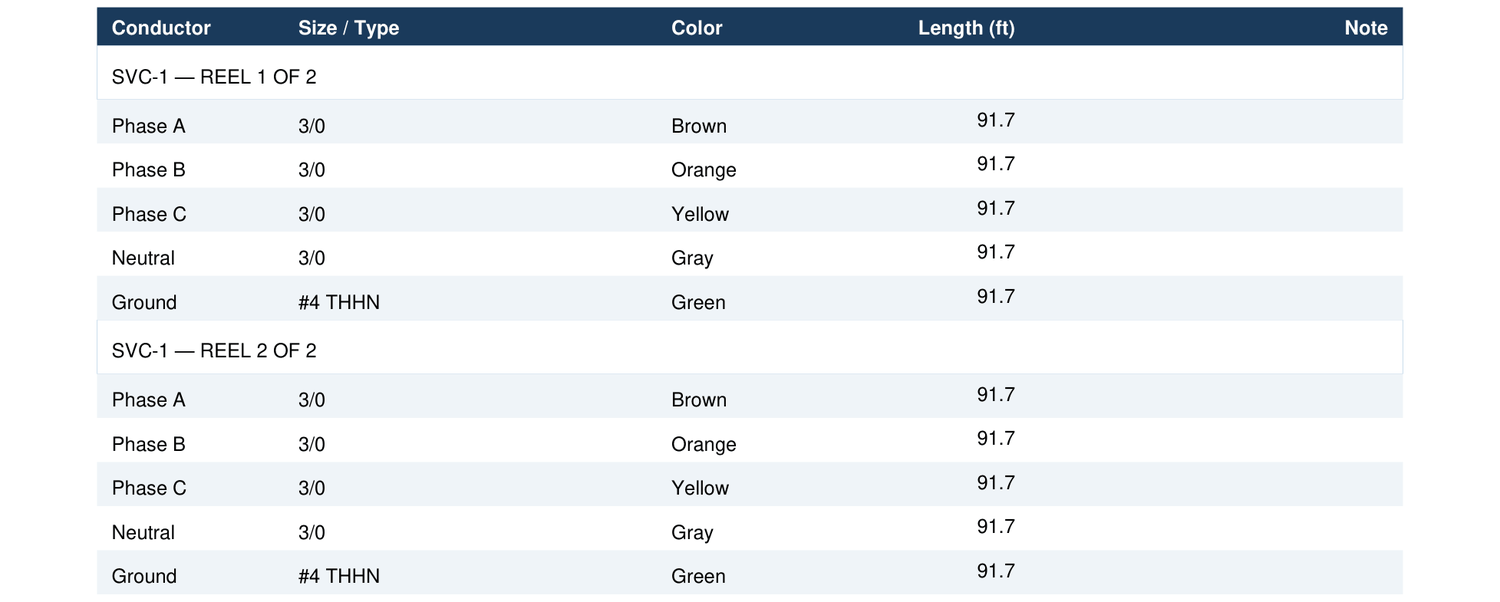
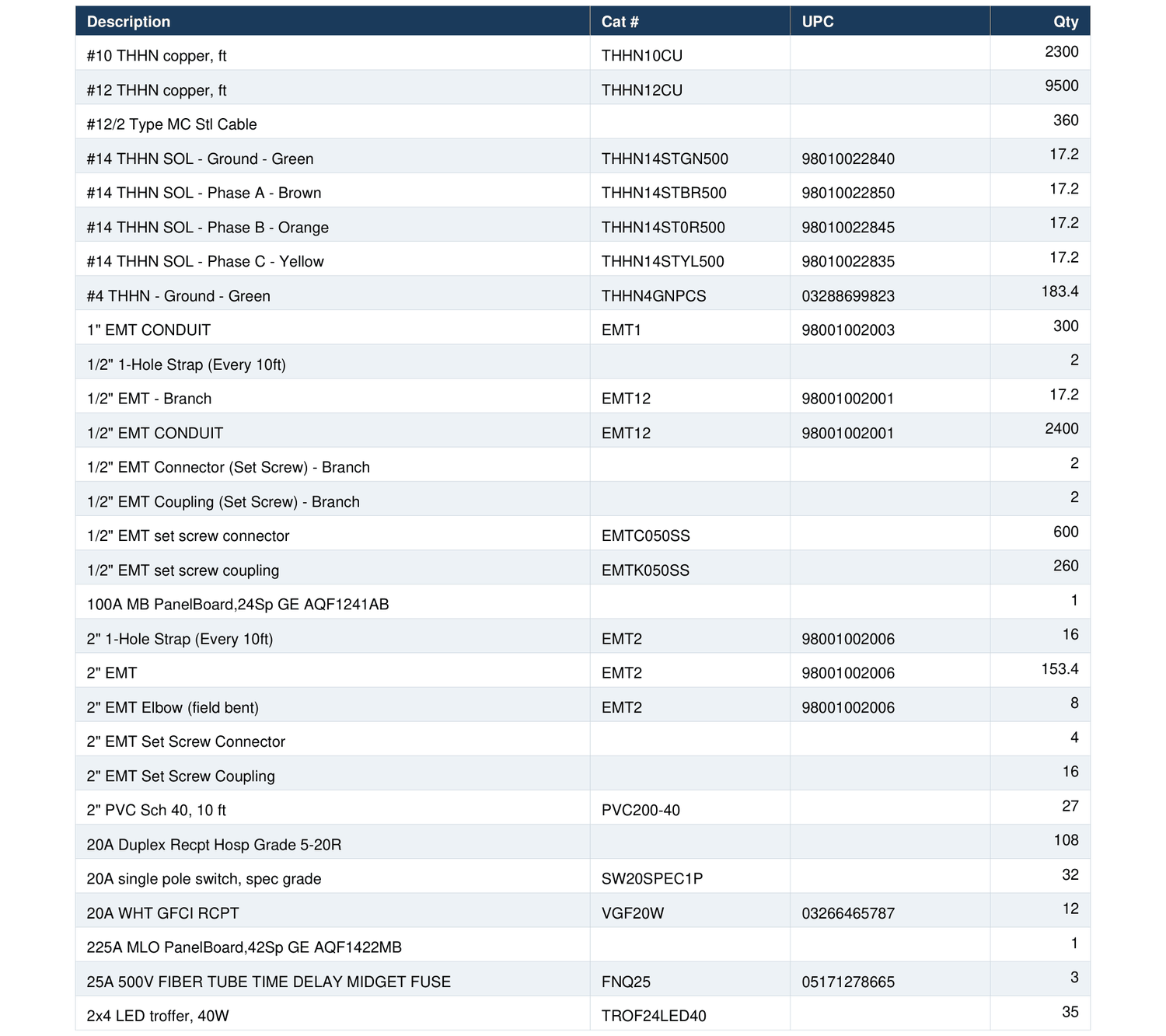
The Feeder Cut Order lists each feeder’s conductors by reel: one reel for each parallel set, each conductor with its size, color and length. A note to the supplier heads it. The Supplier List is one combined list of the job’s material, by description, catalog number, UPC and quantity, to Excel or CSV.
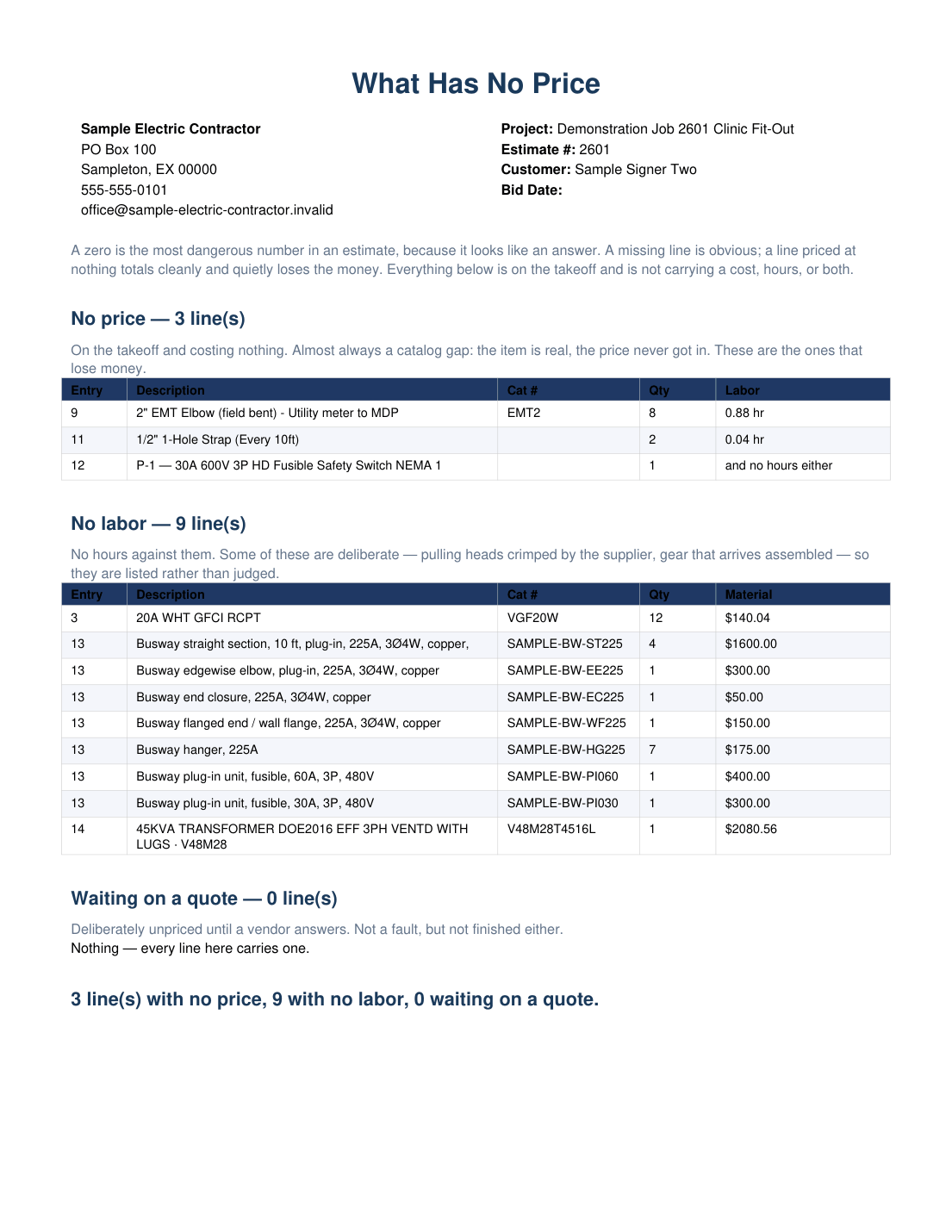
What Has No Price lists every line on the takeoff with no price, no hours or a quote not yet in, so a zero is found before the bid goes out.
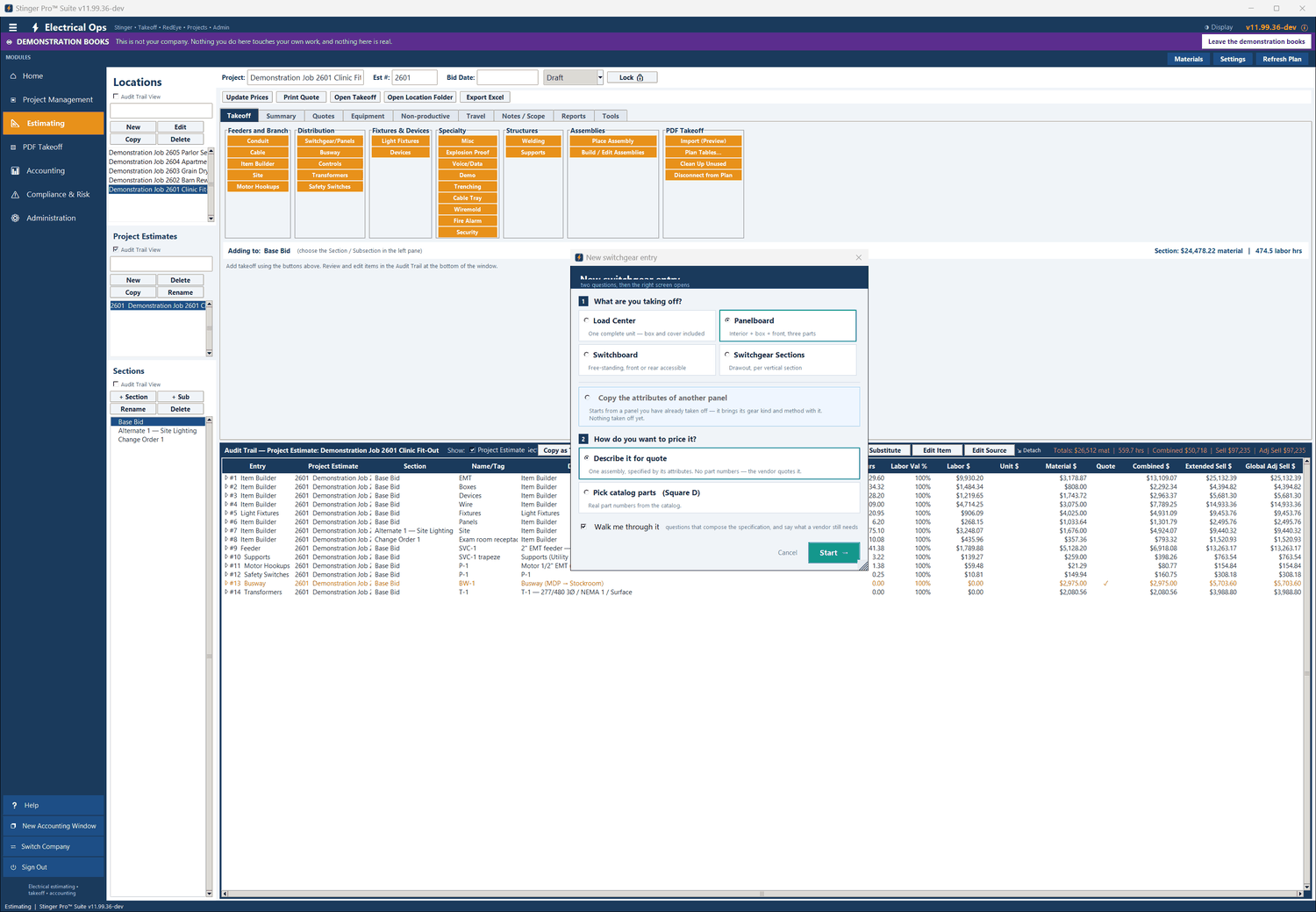
Two questions open the right screen: what kind of gear, and whether to describe it for a quote or pick catalog parts. Guided questions narrow the catalog and show how many parts still match.
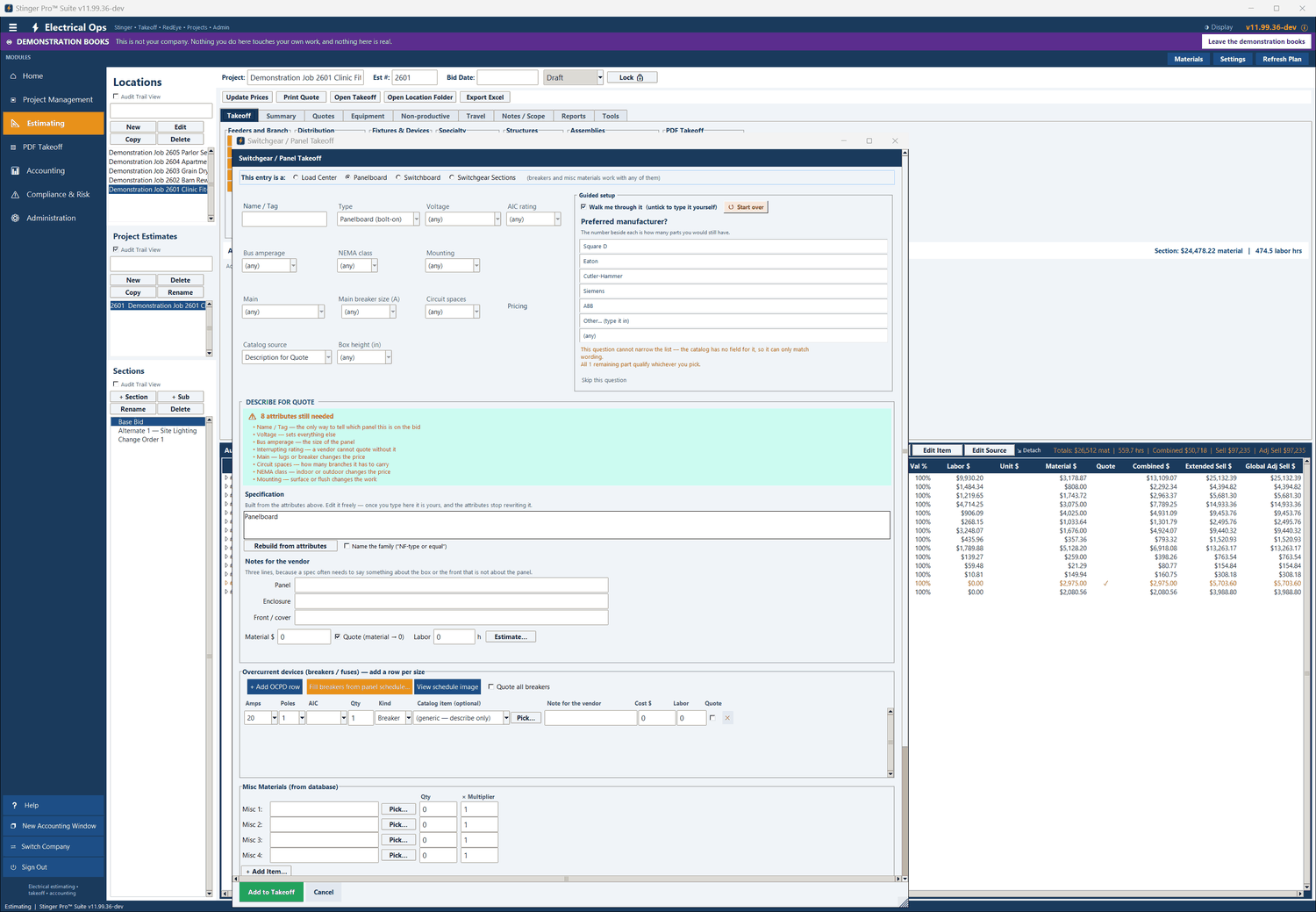
A lineup is built section by section — pull, meter, meter/main, main, distribution — with the end it starts from, where the ground fault and surge protection sit, and labor for each section. Breakers are assigned to the section they go in. A panel schedule can be read from the drawing PDF into the breaker grid, and the interrupting rating is read from the catalog number in the breaker picker. Described-for-quote gear is not marked ready until every attribute a vendor needs is filled in.
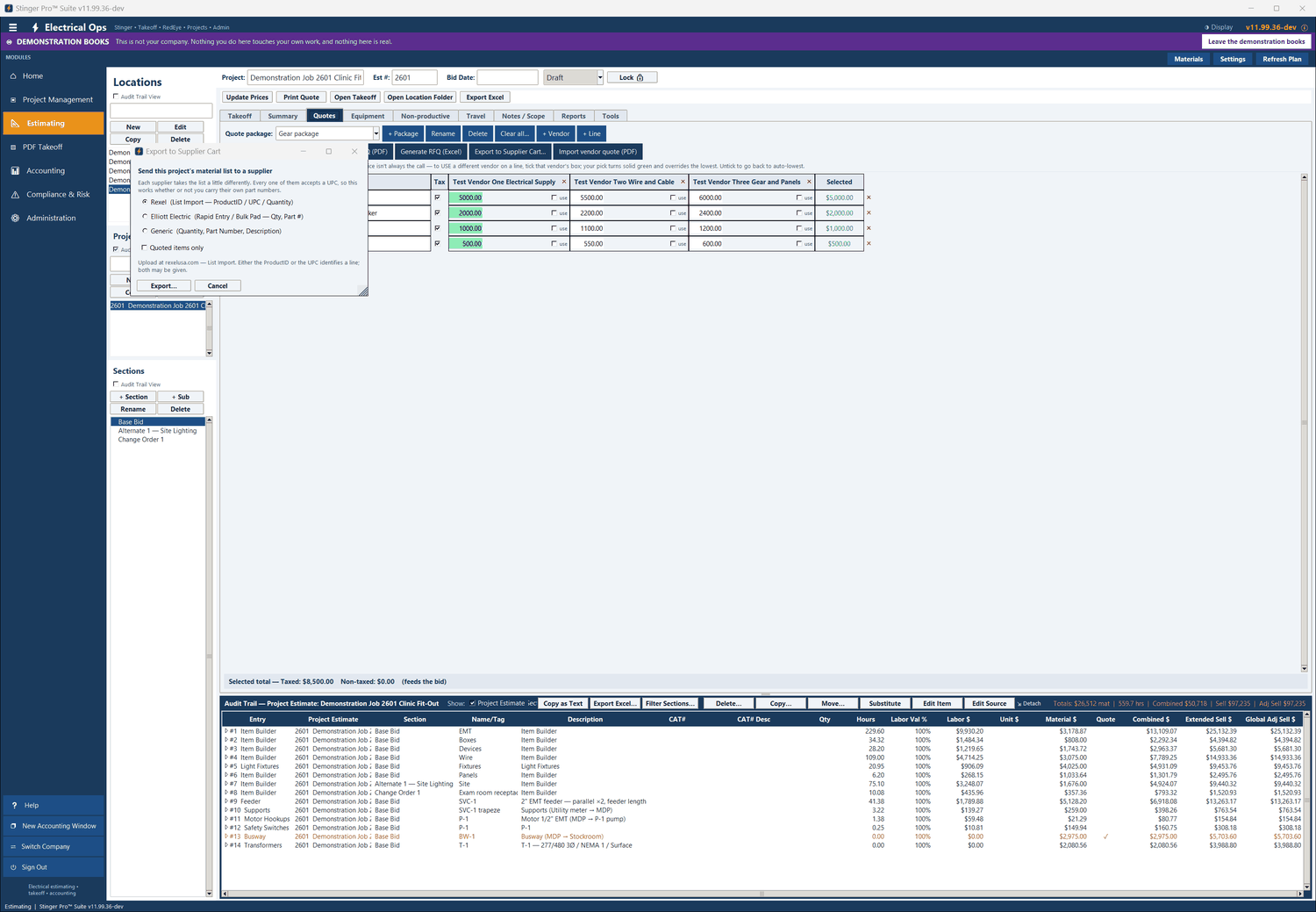
A quote matrix for each package, one column per vendor. The lowest price on each line is selected; check another to override it.
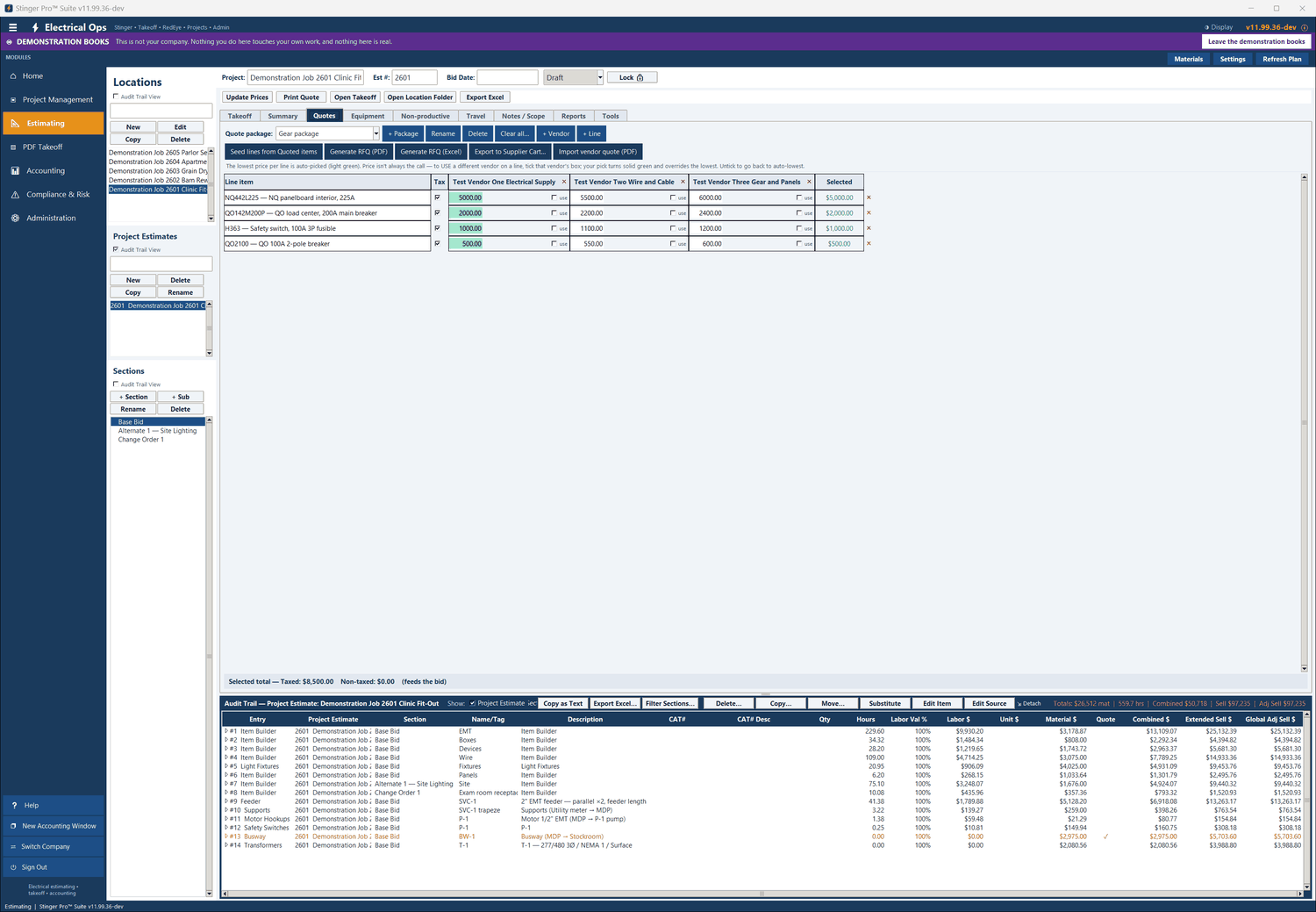
Import vendor quote (PDF) reads the lines from a vendor’s quote and keeps the original with the job. Generate RFQ (PDF) and Generate RFQ (Excel) write the request.
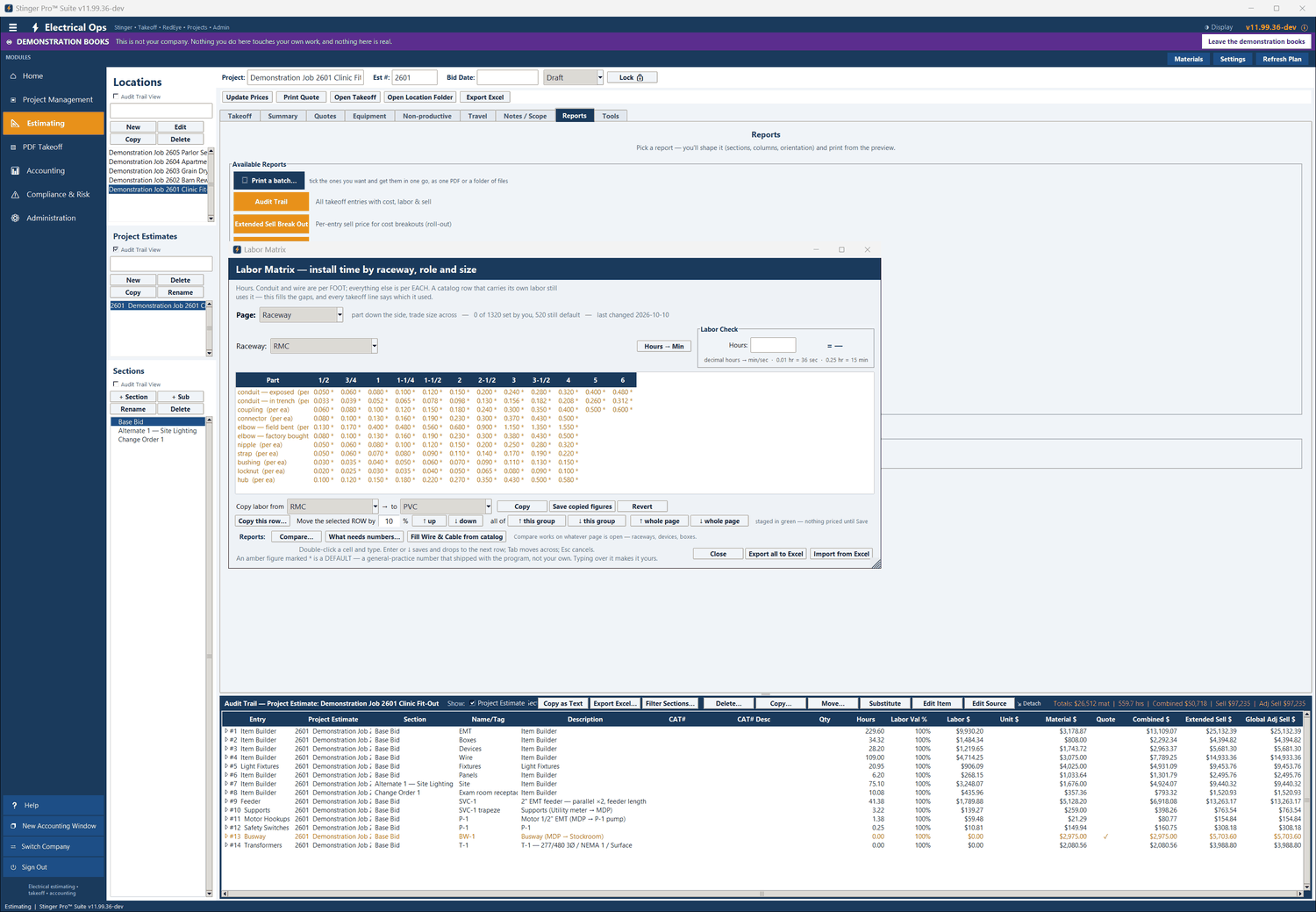
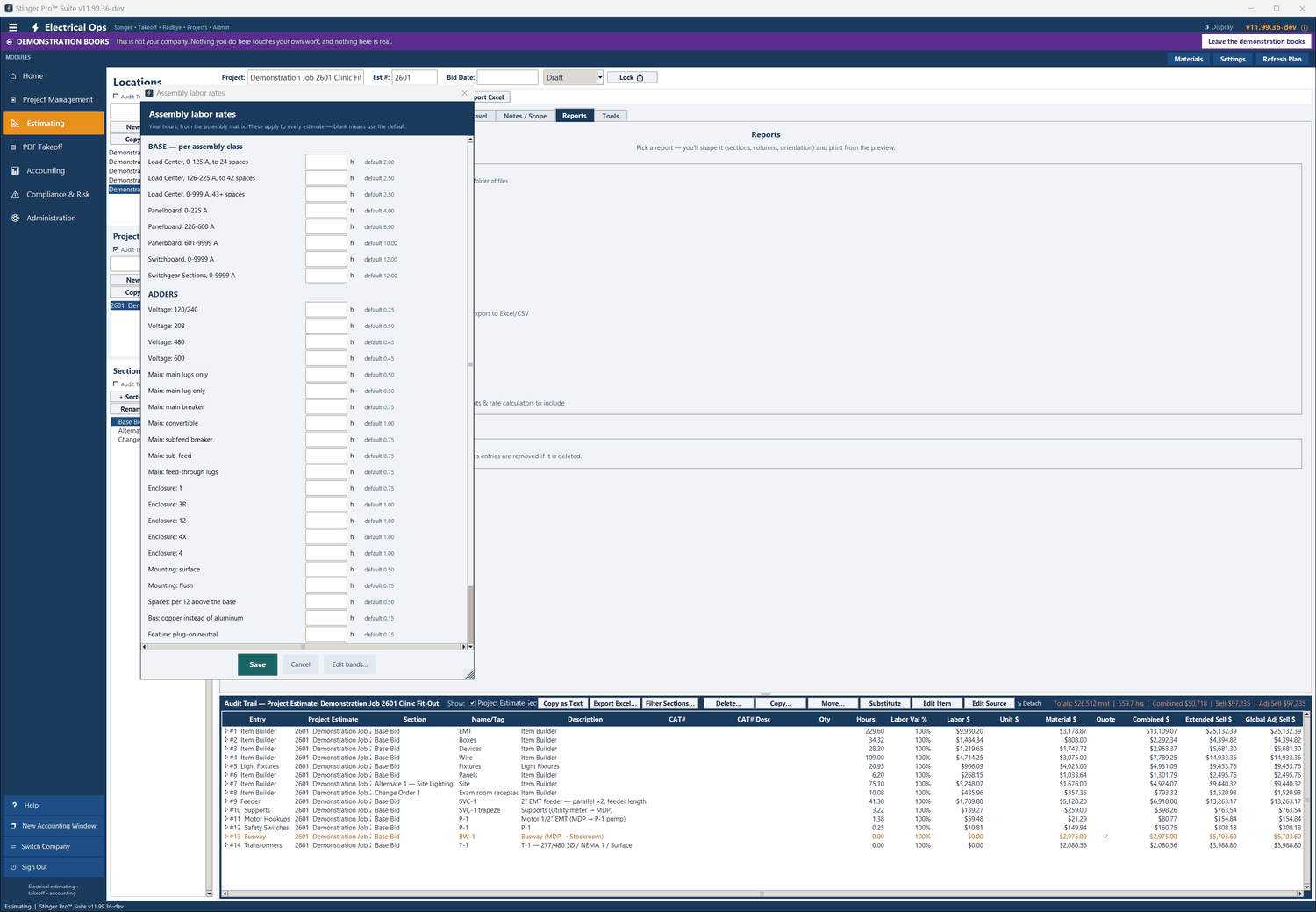
Hours come from the catalog row or the Labor Matrix, and each line records which. Gear labor follows the gear’s attributes.
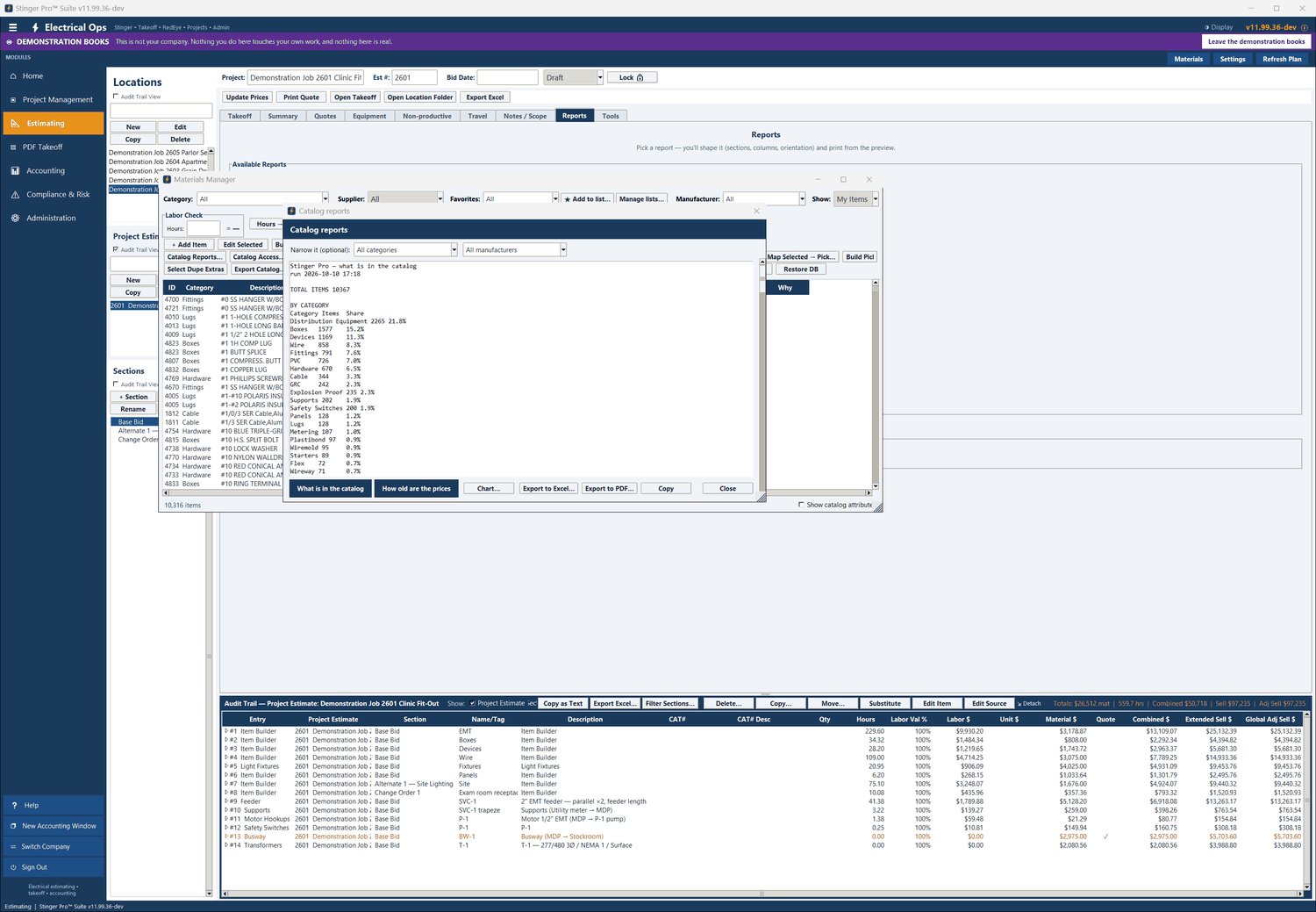
A supplier’s price file updates the catalog. Rows are matched by UPC, then manufacturer and catalog number, then catalog number, then description with the trade size required to match. The result is previewed before anything is written, and labor is never changed by a price update.
Wire Price Update reads a wire price sheet PDF and applies a distributor multiplier and a cushion percentage. The program reads text in the PDF; it does not scan images.
Each report opens as the PDF it will print. Options re-draw it; Excel is made from the same report. Print a batch… prints several as one PDF or a folder of files.