Enter the service conductors, the electrodes at the building and how the GEC runs. The app sizes the main bonding jumper and the GEC to each electrode, says how each is installed with its 2023 NEC section, draws it and writes a PDF.
The app’s own example, every screen in order, 11 steps.
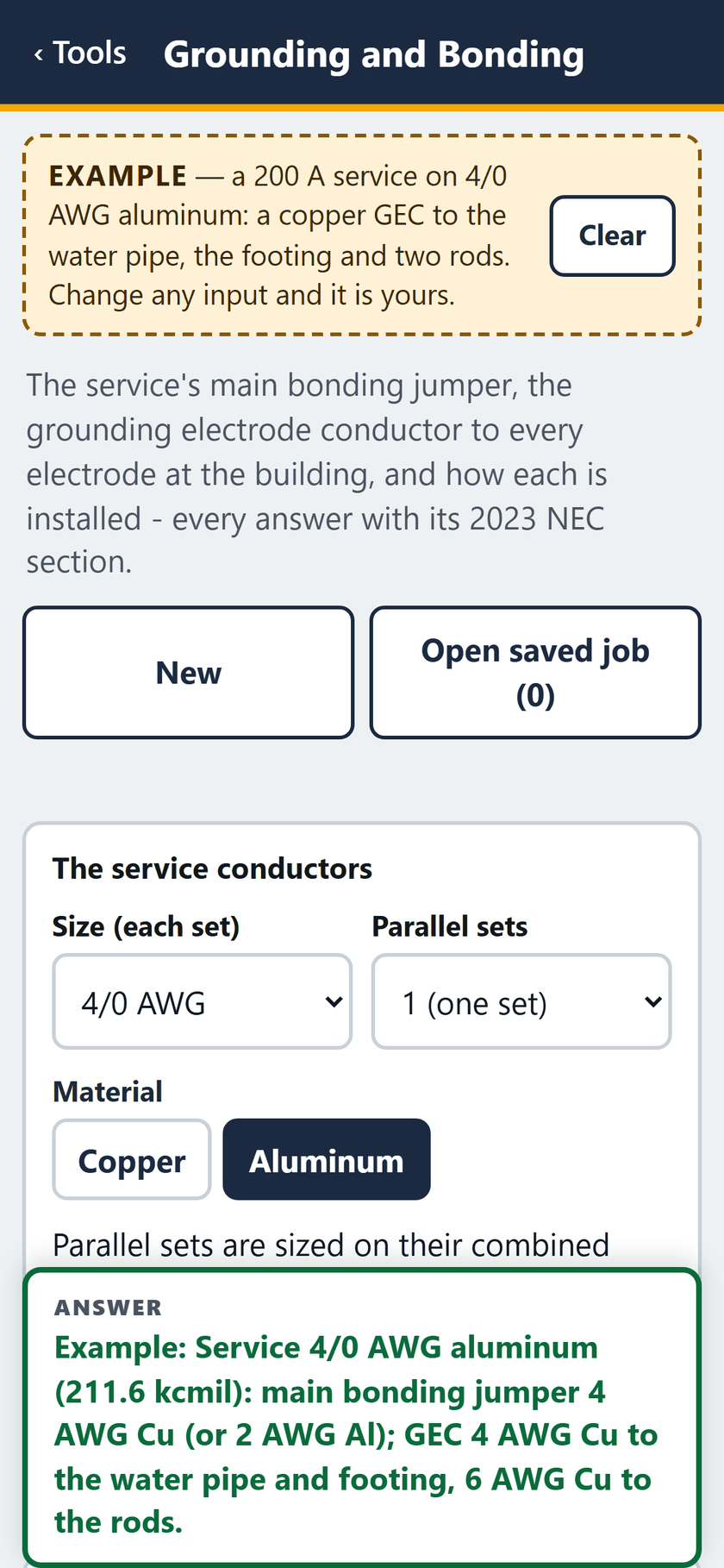
STEP 1 OF 11The example opens filled in: a 200 A service on 4/0 AWG aluminum, a copper GEC to the water pipe, the footing and two rods.
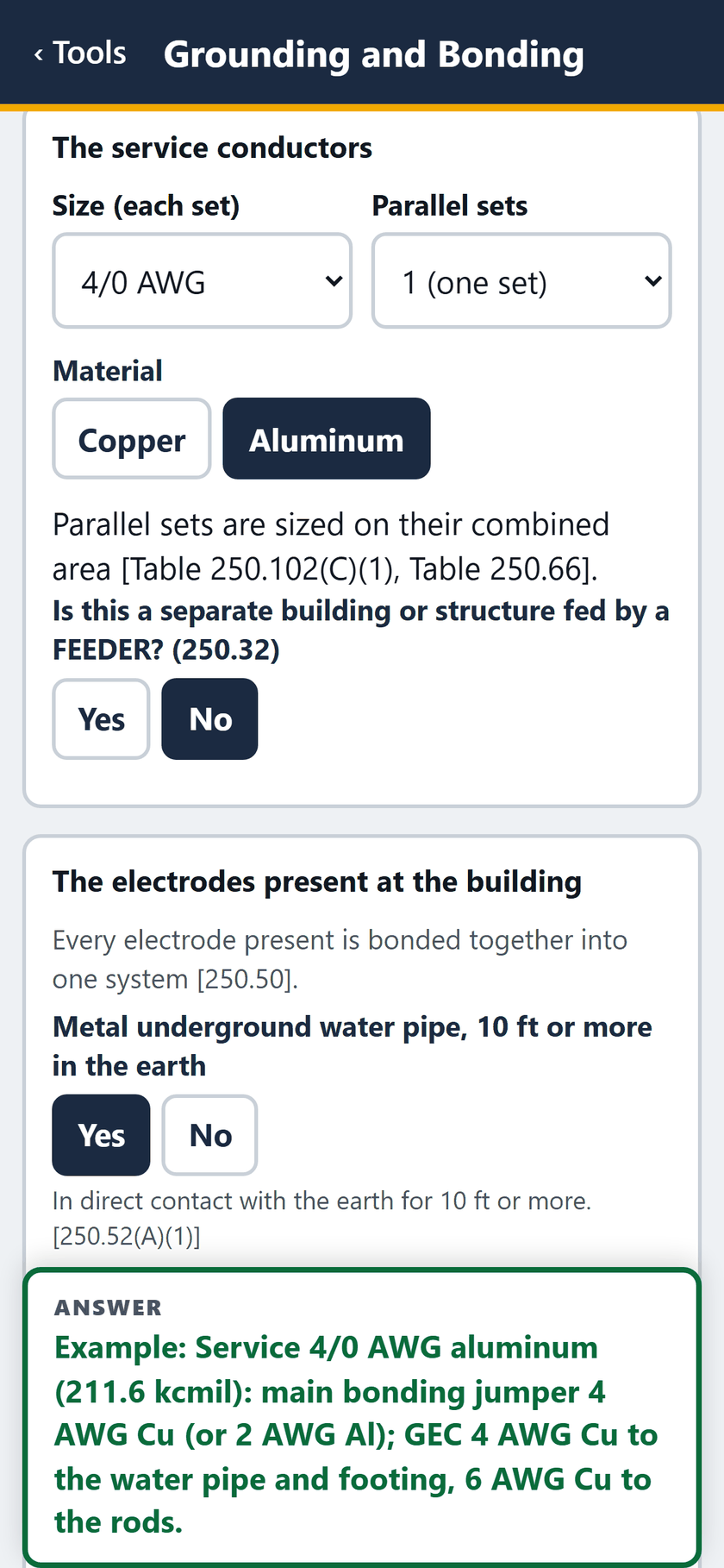
STEP 2 OF 11The service: 4/0 AWG aluminum, one set, not a separate building fed by a feeder. A metal water pipe is present.
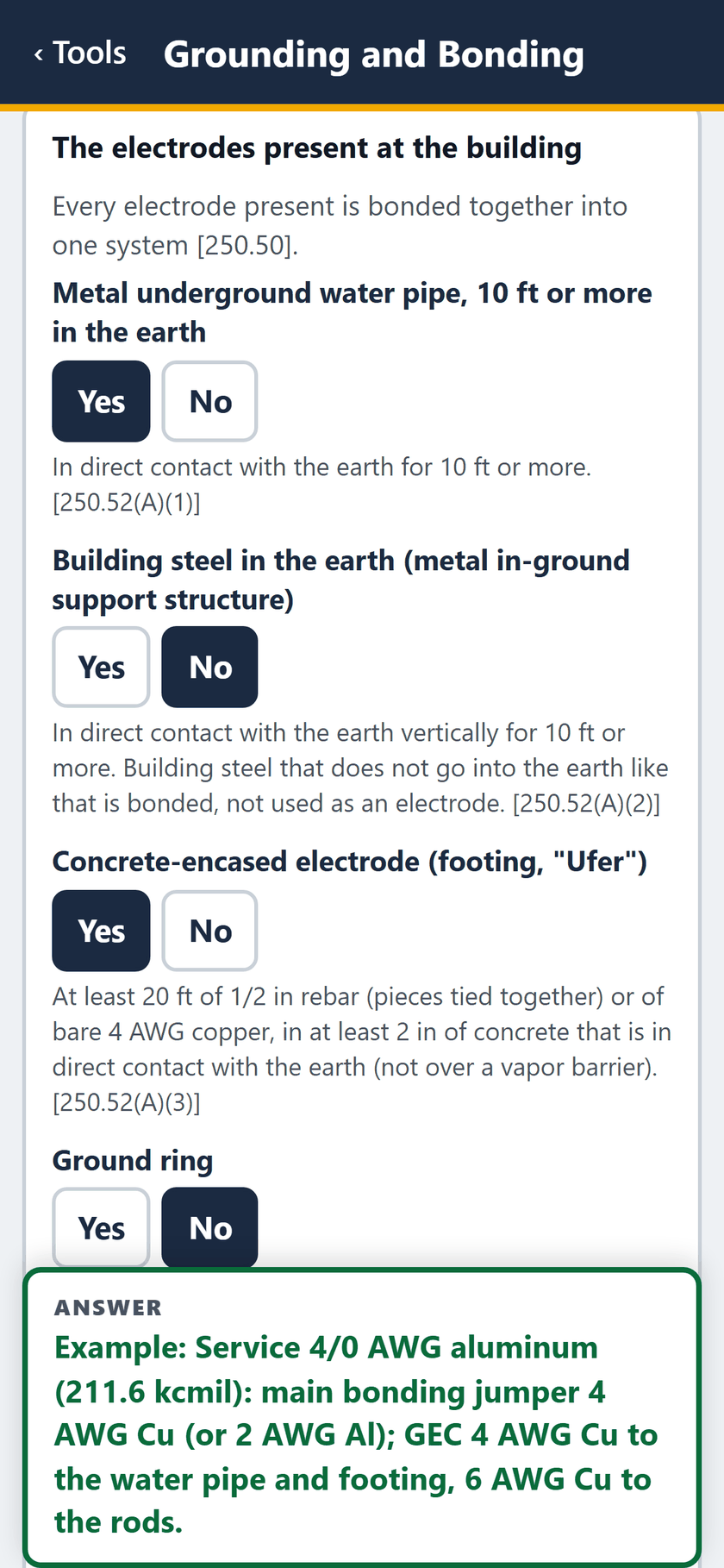
STEP 3 OF 11The electrodes at the building: water pipe yes, building steel no, concrete-encased footing yes, ground ring no.
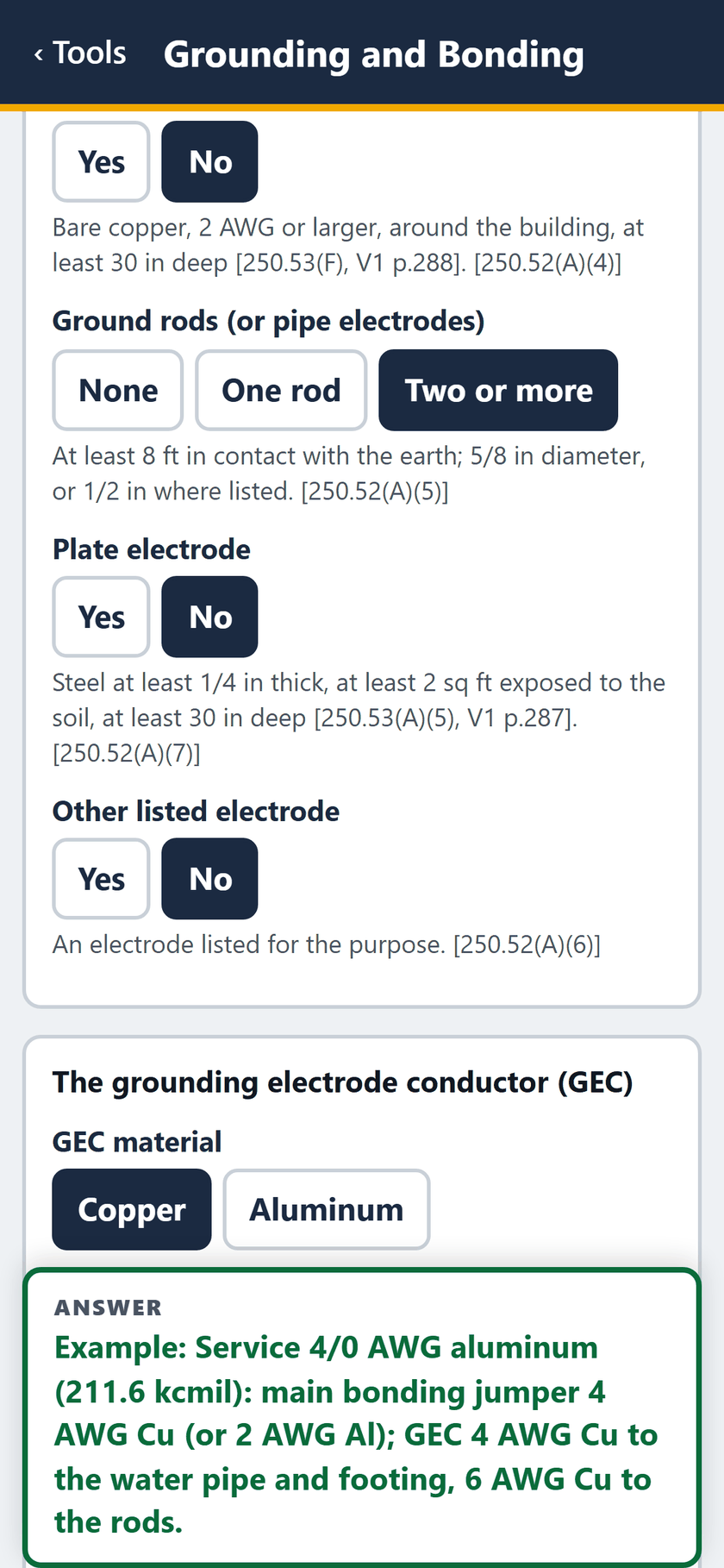
STEP 4 OF 11Two or more ground rods, no plate and no other listed electrode. The GEC is copper.
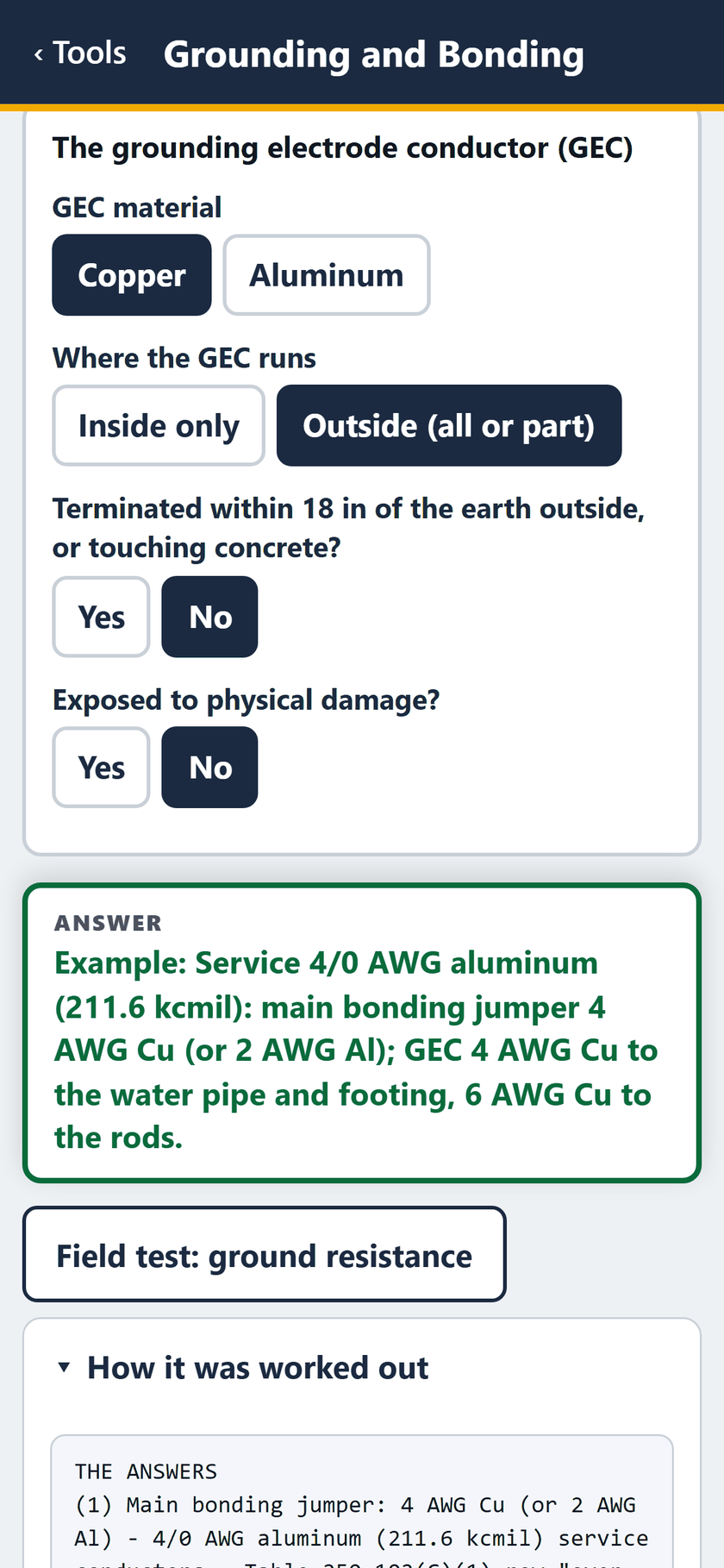
STEP 5 OF 11The GEC runs outside, not within 18 in of the earth, not exposed to damage. The answer, a field test, and how it was worked out.
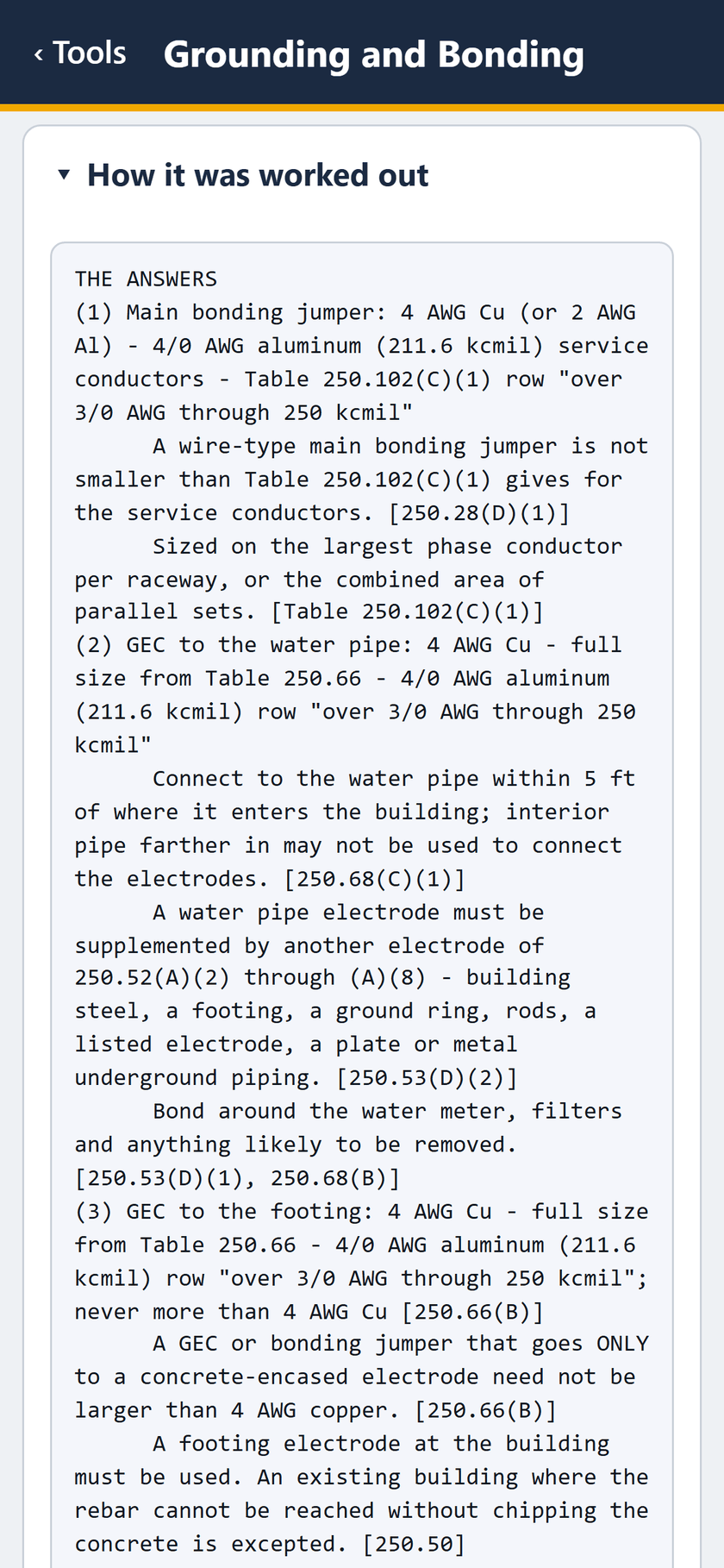
STEP 6 OF 11How it was worked out: the main bonding jumper from Table 250.102(C)(1), 4 AWG Cu to the water pipe and the footing.
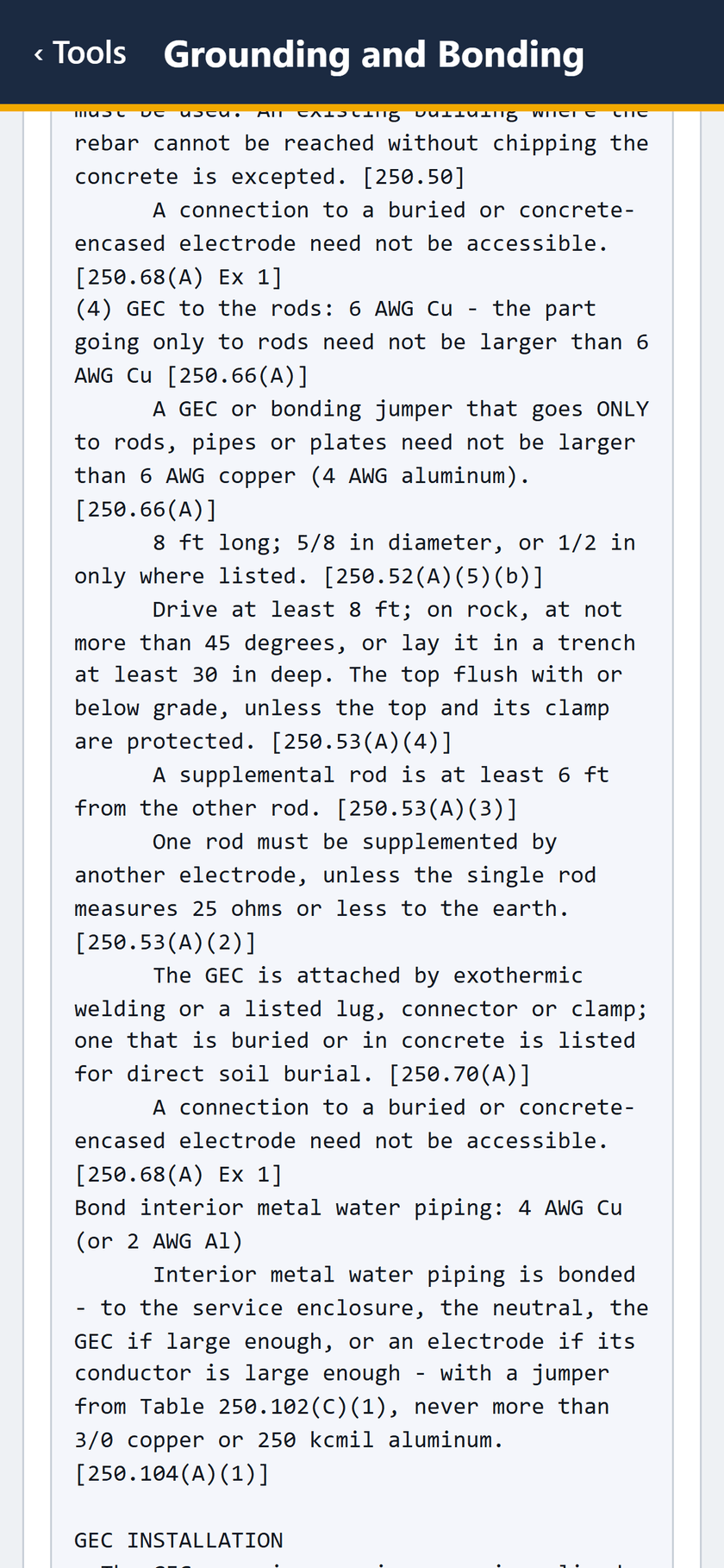
STEP 7 OF 11The working goes on: 6 AWG Cu to the rods, how the rods are driven and spaced, and bonding interior water piping.
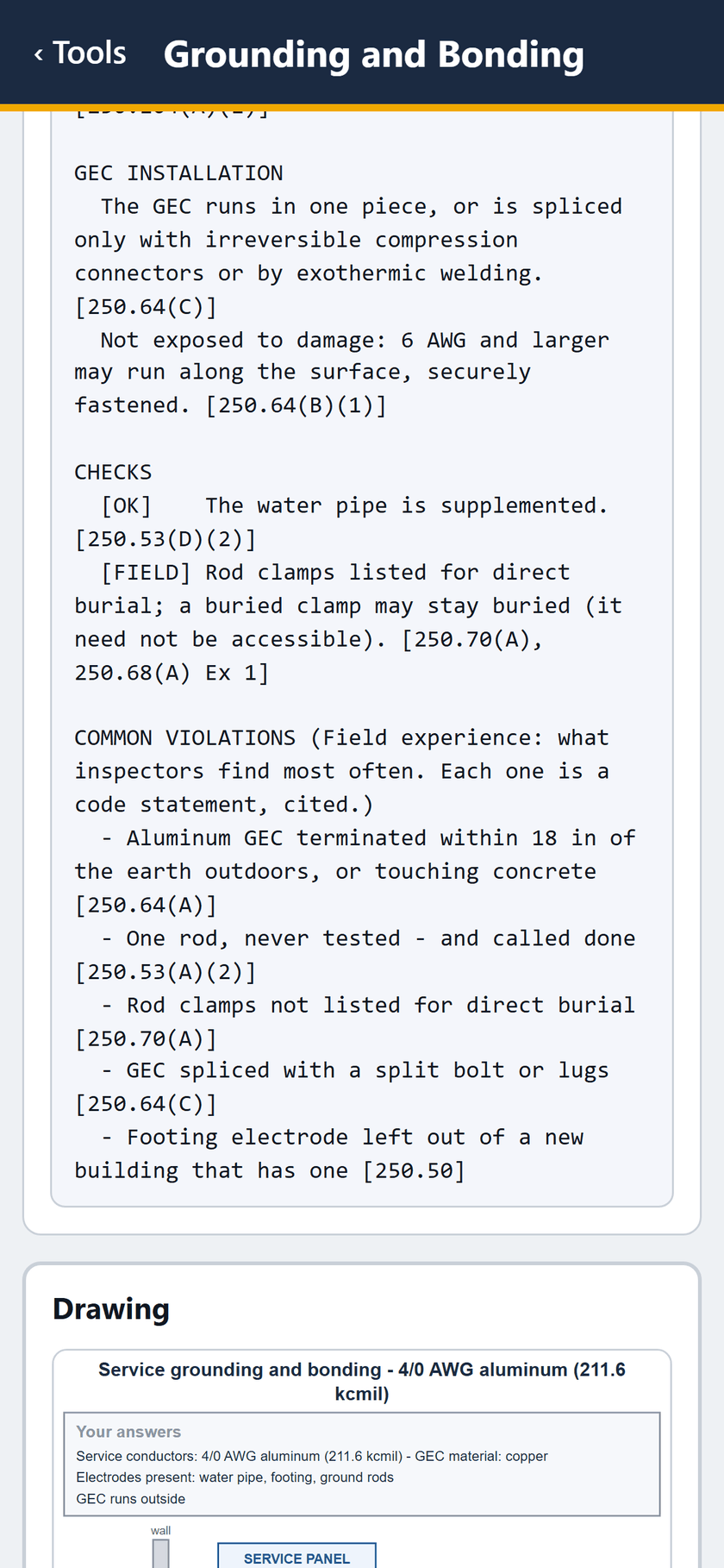
STEP 8 OF 11GEC installation, the checks, and the common violations inspectors find, each with its section. Then the drawing.
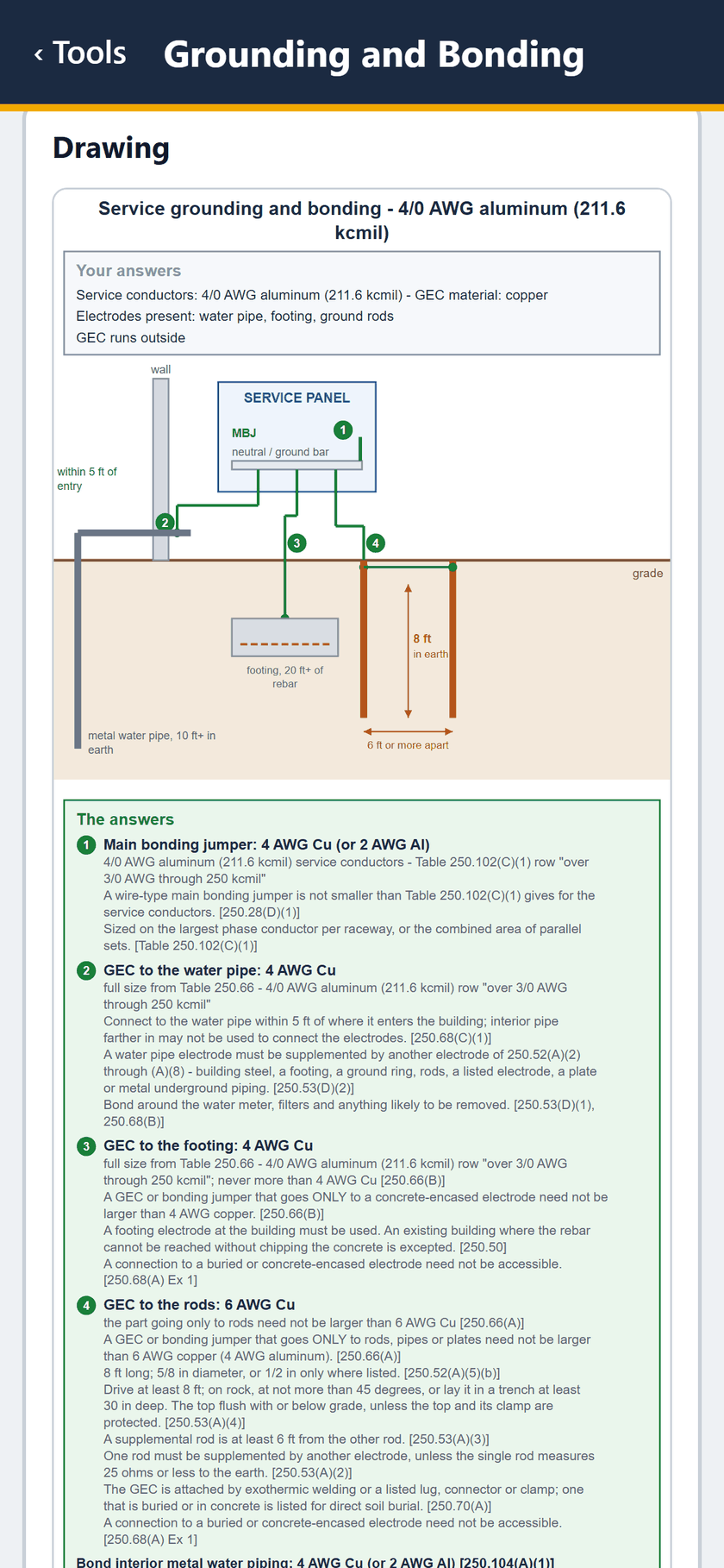
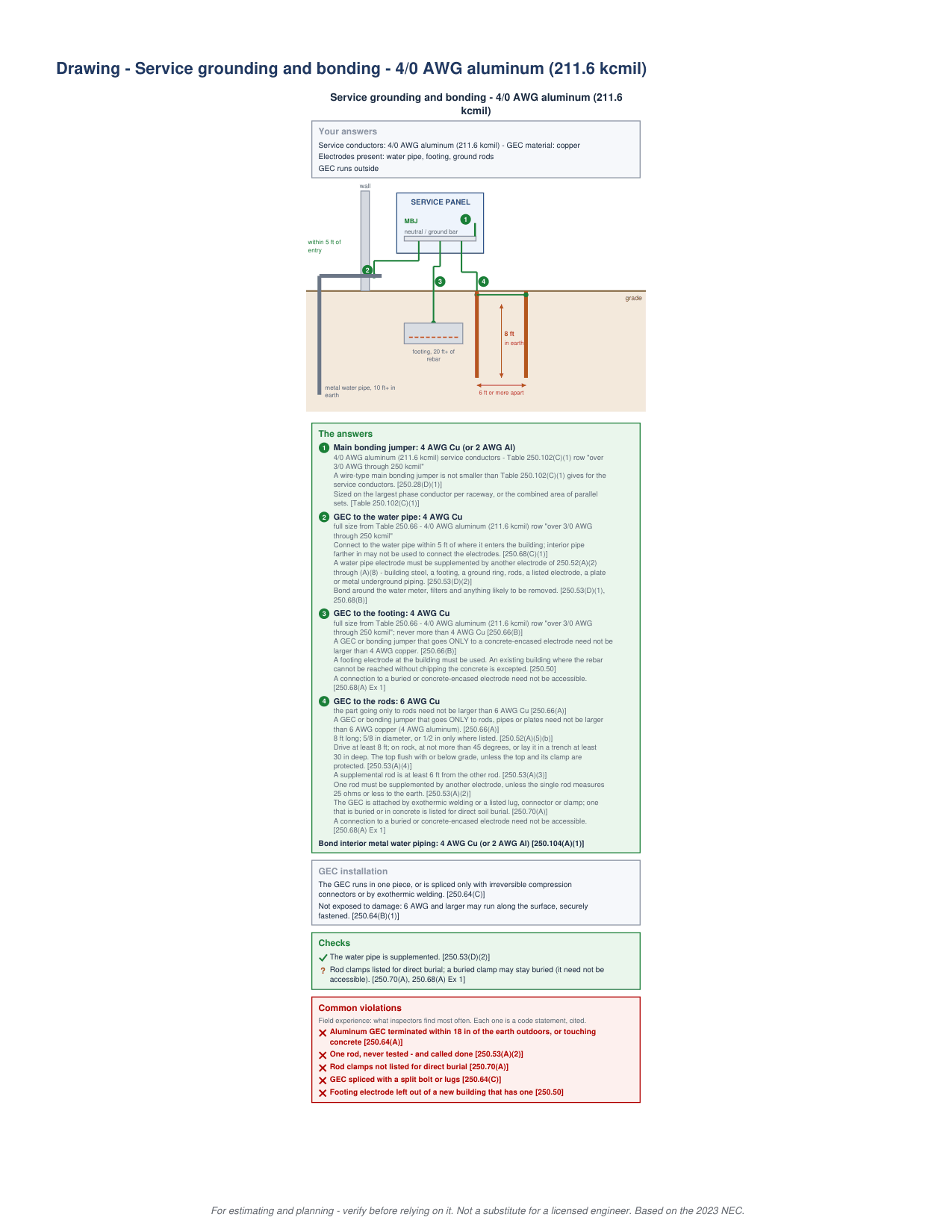
STEP 9 OF 11The drawing: service panel, water pipe within 5 ft of entry, footing, two rods 6 ft or more apart, and the four answers.
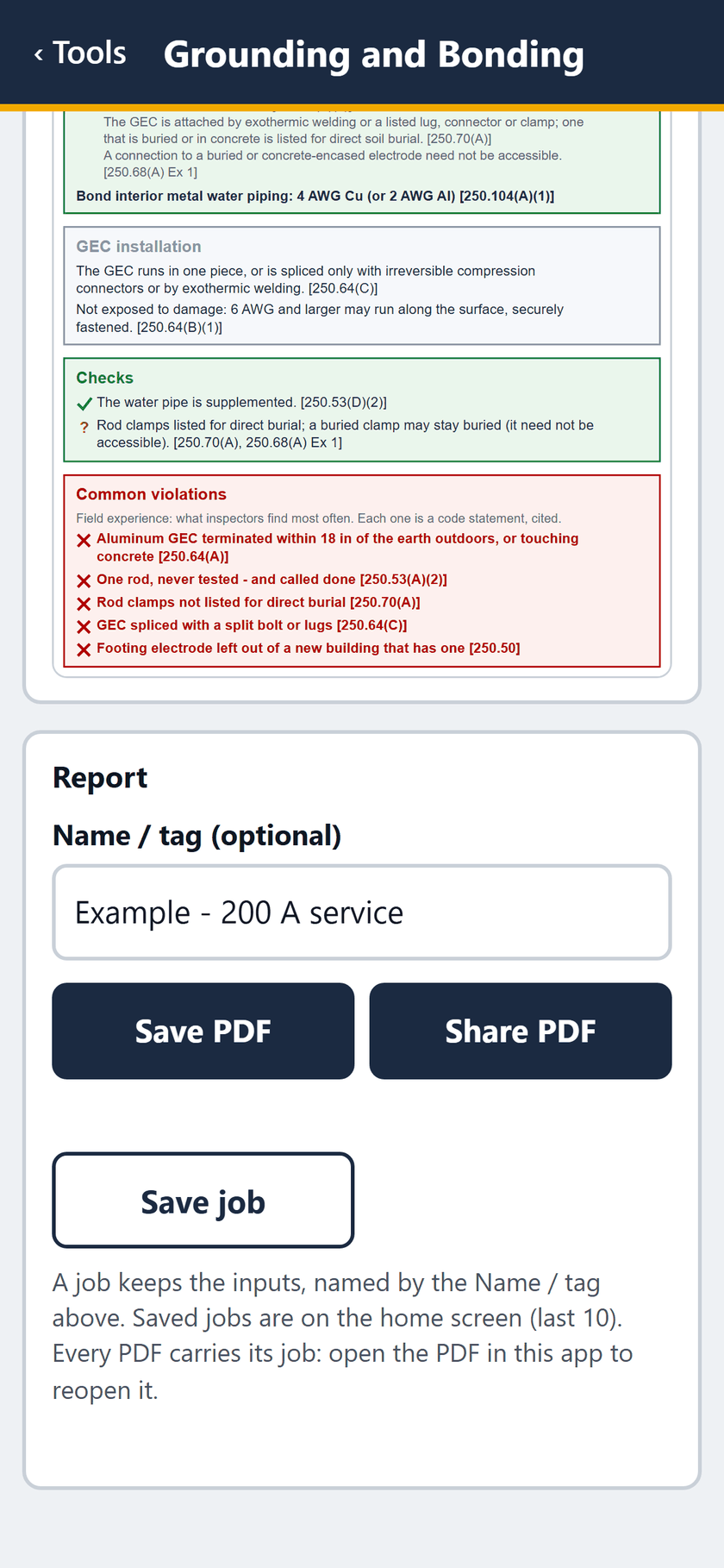
STEP 10 OF 11On the drawing: GEC installation, the checks and the common violations. Then the report: save or share the PDF, or save the job.
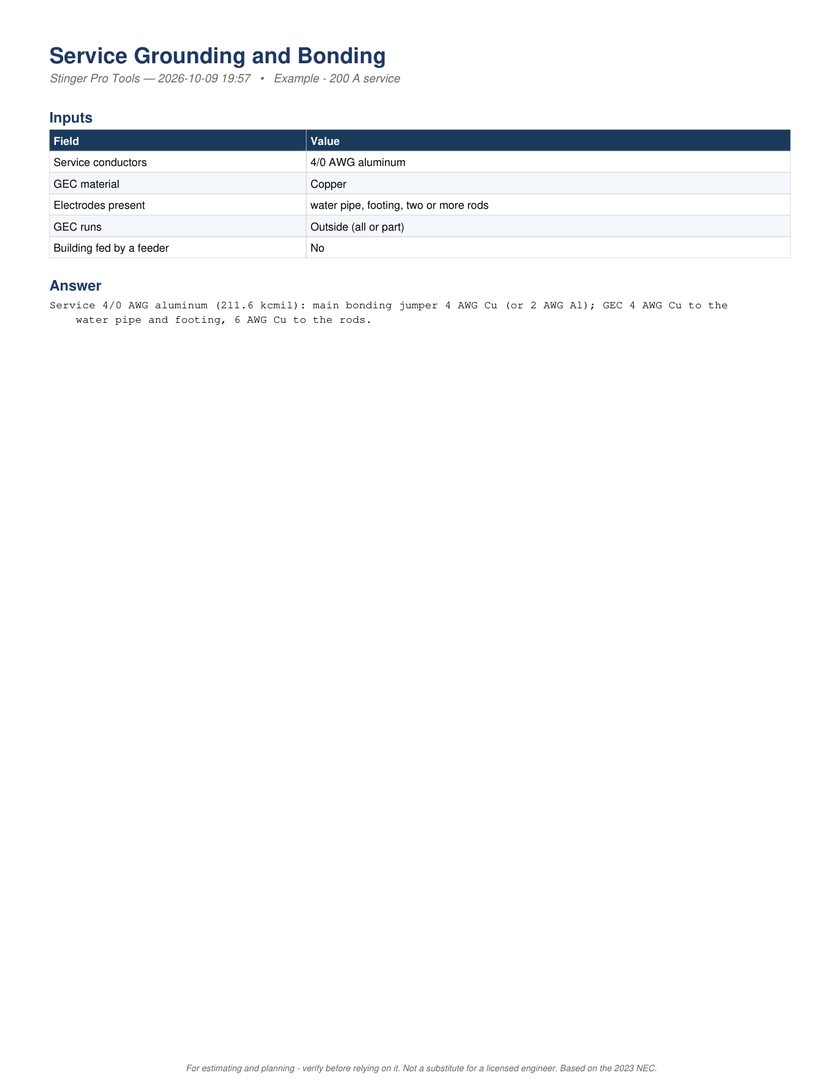
STEP 11 OF 11The PDF, page 1: the inputs and the answer, 4 AWG Cu bonding jumper, 4 AWG Cu to the water pipe and footing, 6 AWG Cu to the rods.
The same 11 screens with the captions burned in. No sound.
MP4, 1.6 MB, 12 seconds.
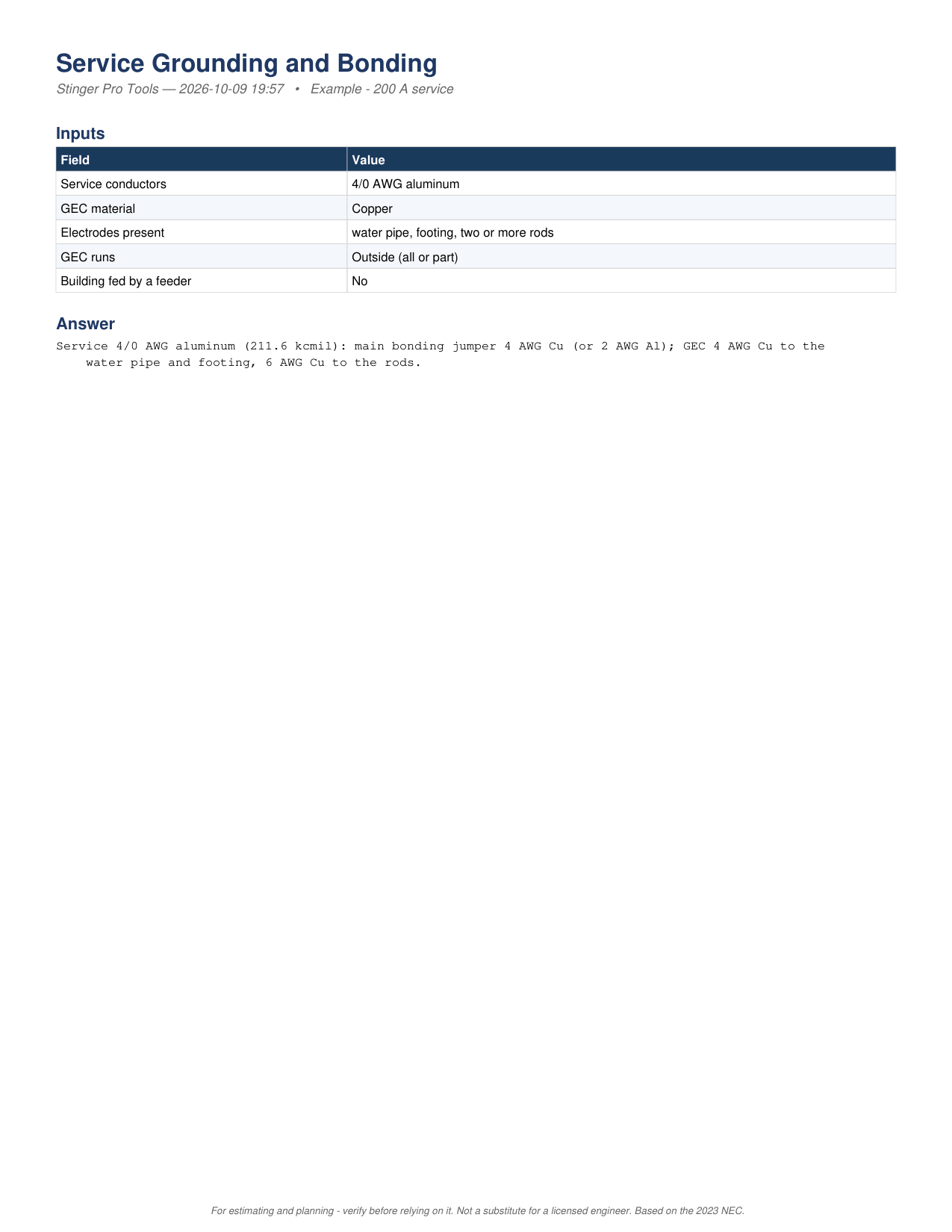
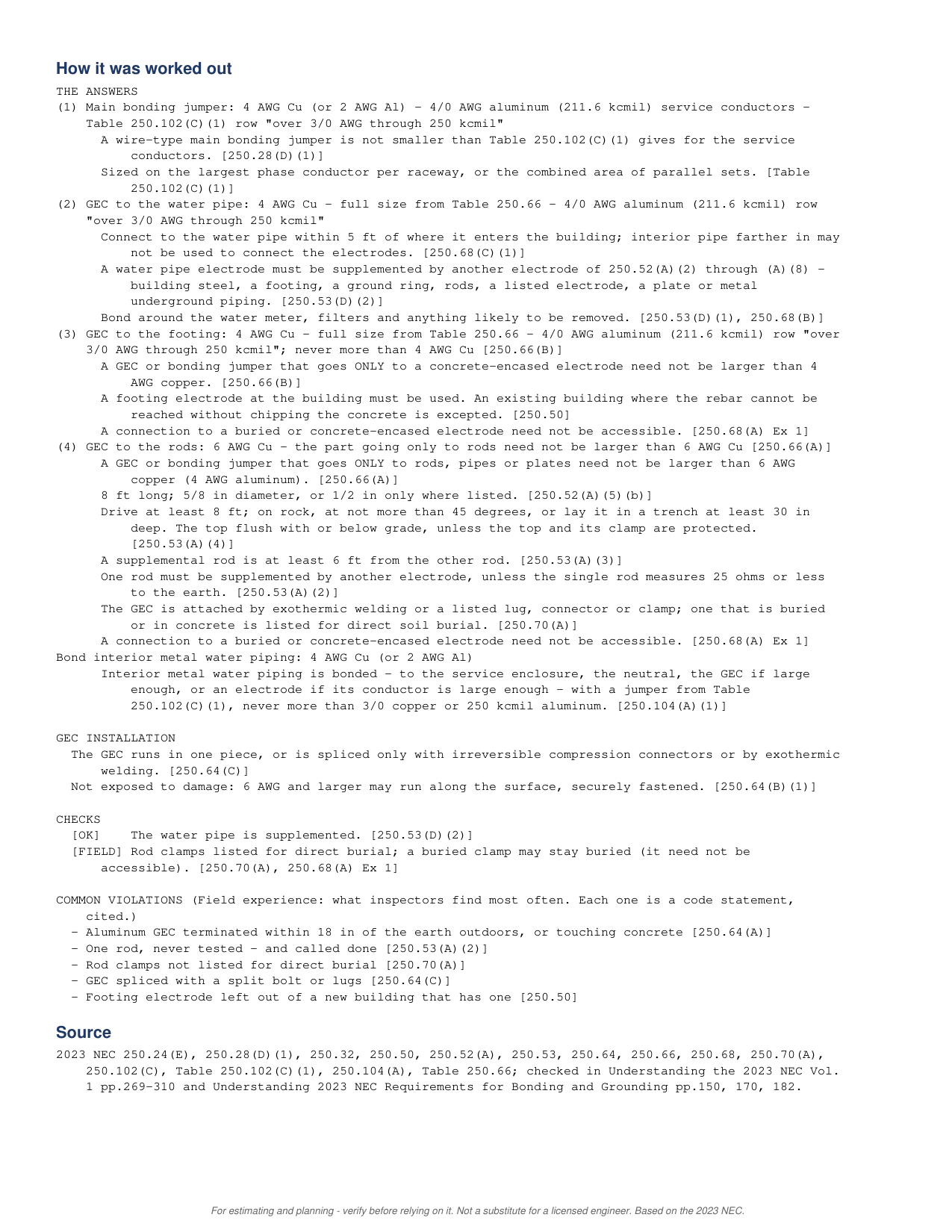
The PDF report for the same job, all 3 pages as the app writes it.
On Android, $49.99 once. Everything on this page.

Grounding and Bonding is not in the Suite. It was built for the app and runs only in Stinger Pro Tools.