Pull Tension takes the cable, conduit, lubricant and the run in the order the cable meets it, and gives back the pulling tension, the sidewall pressure on each bend, the jamming check, the pull direction, the puller size and a pull plan.
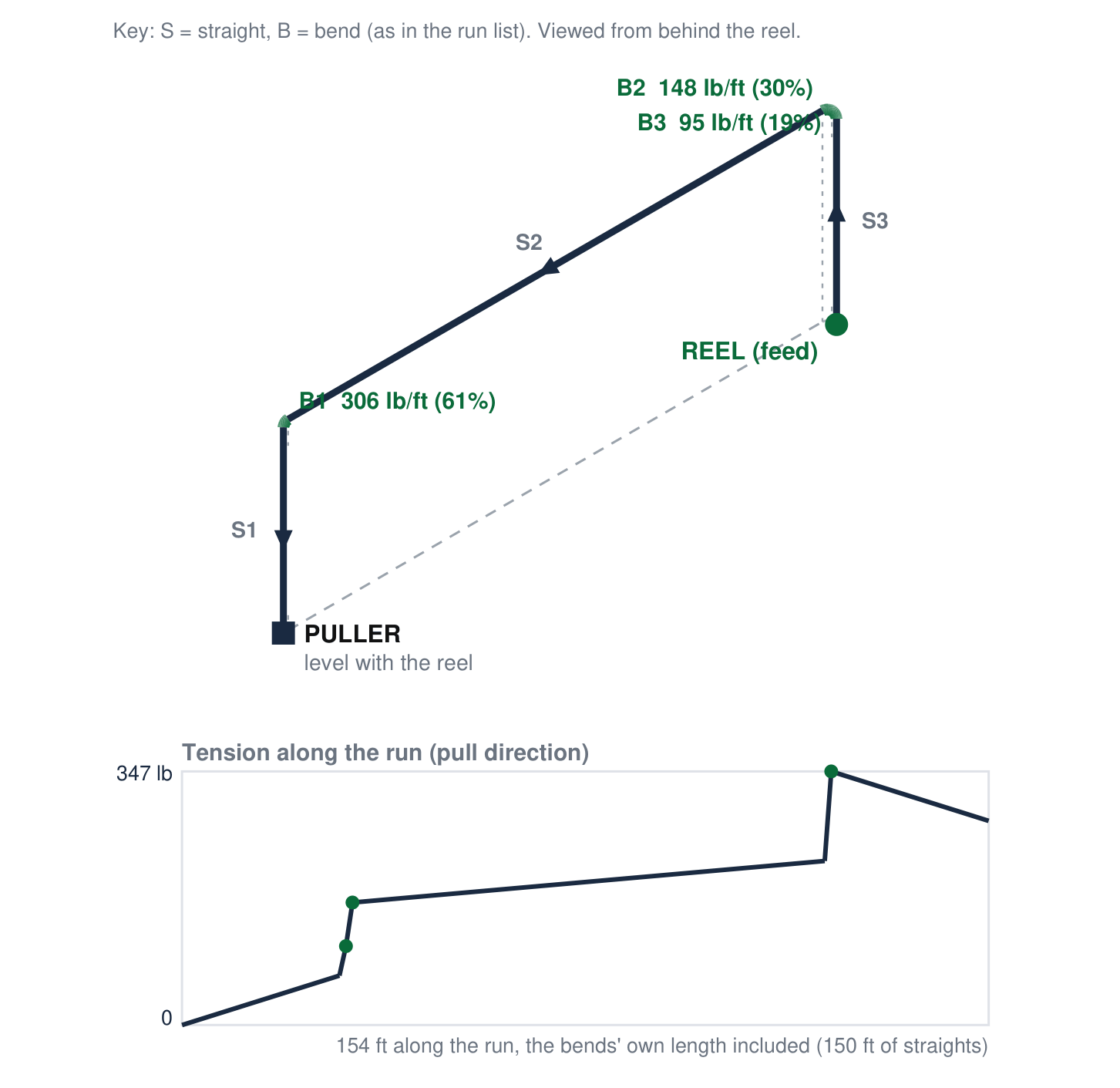
The run drawn isometric to scale, each bend colored by its sidewall pressure against the limit, with the tension along the run in the direction it is pulled.
The report the Suite wrote for this example, a 14-page Cable Pull Plan; six of its pages are shown.
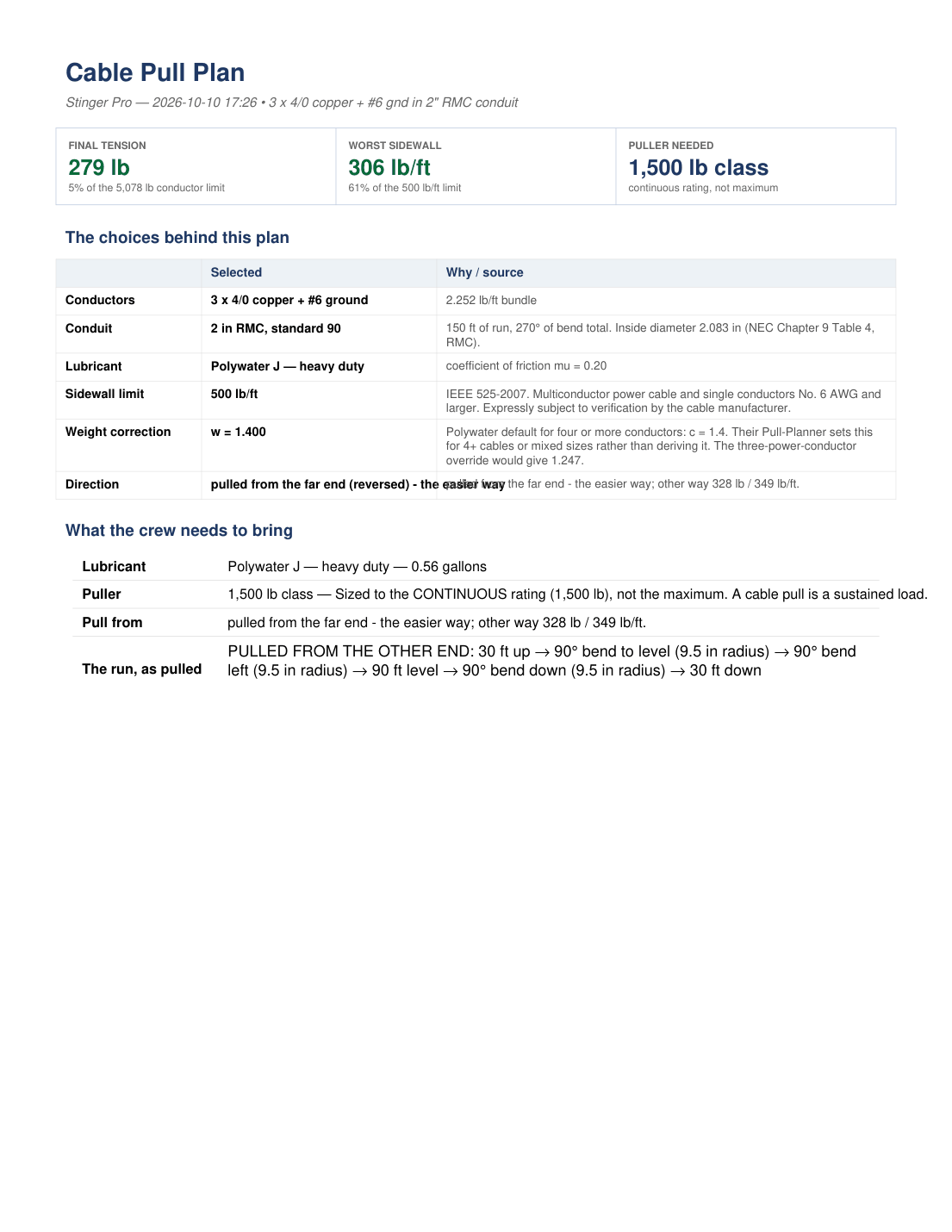
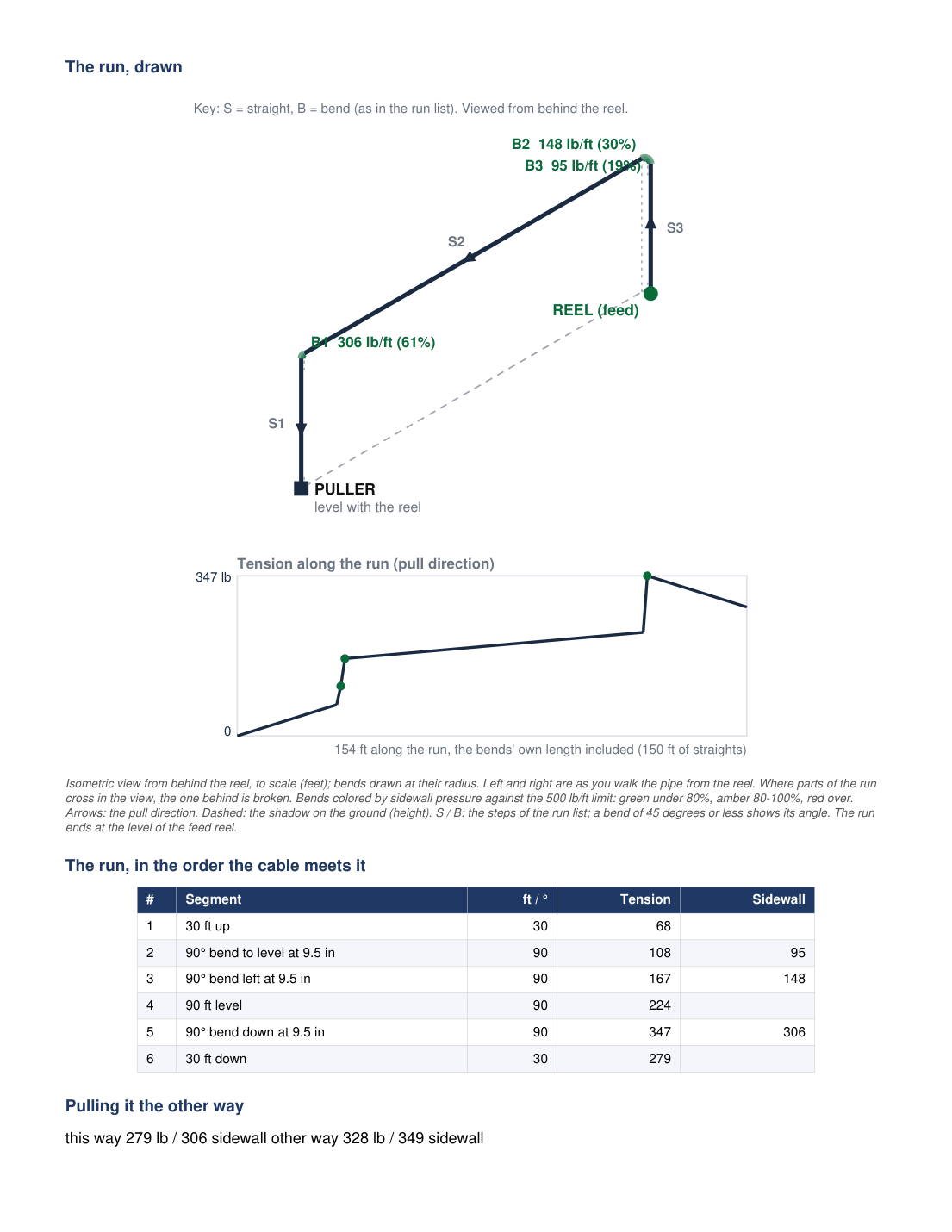
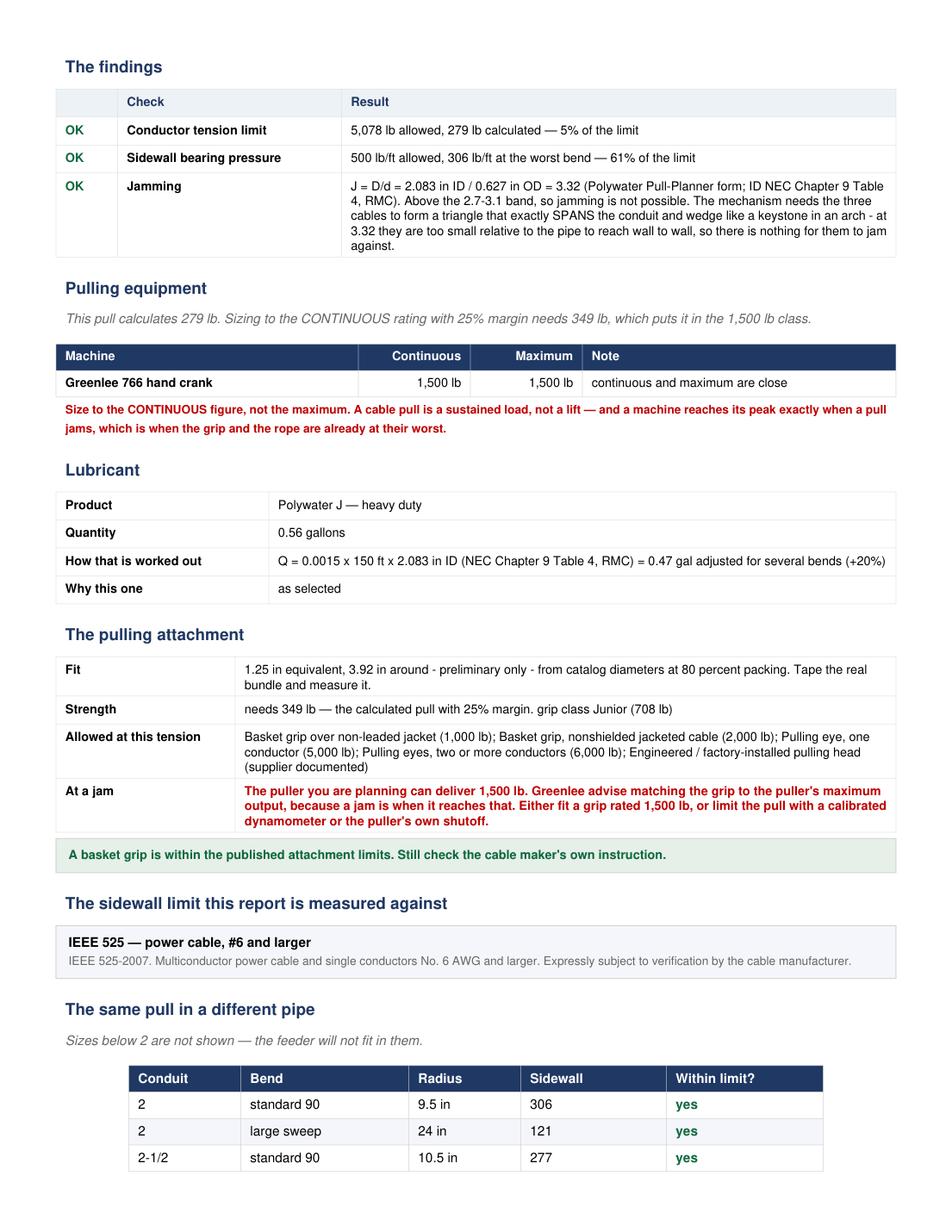
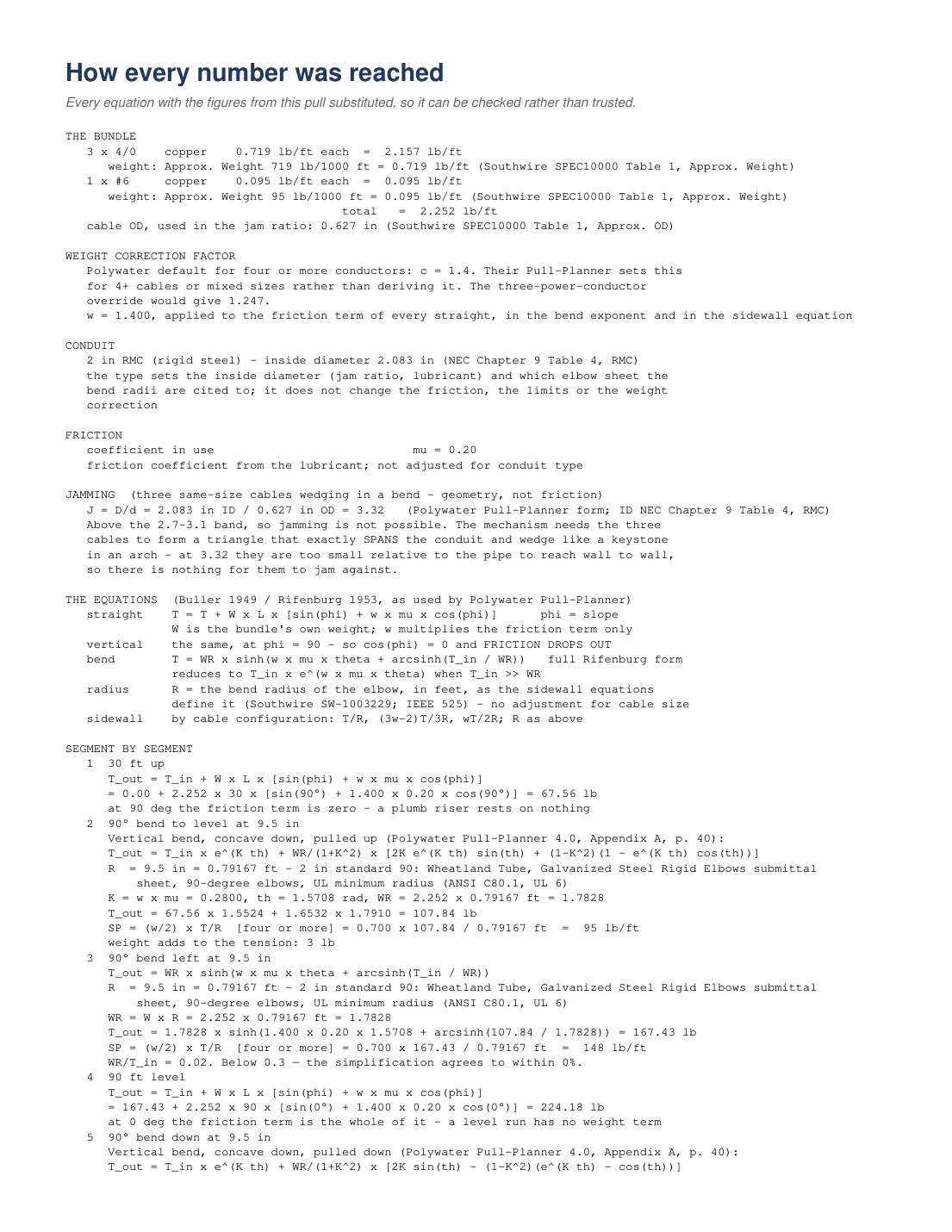
The summary and the choices behind it, the run drawn with its tension along the run, and every equation with this pull's figures. The report goes on with the manufacturers' cable and elbow sheets the figures come from, appended unaltered.
The phone app's example job, Example - reference pull, opened with Open phone job… and worked out by the Suite.
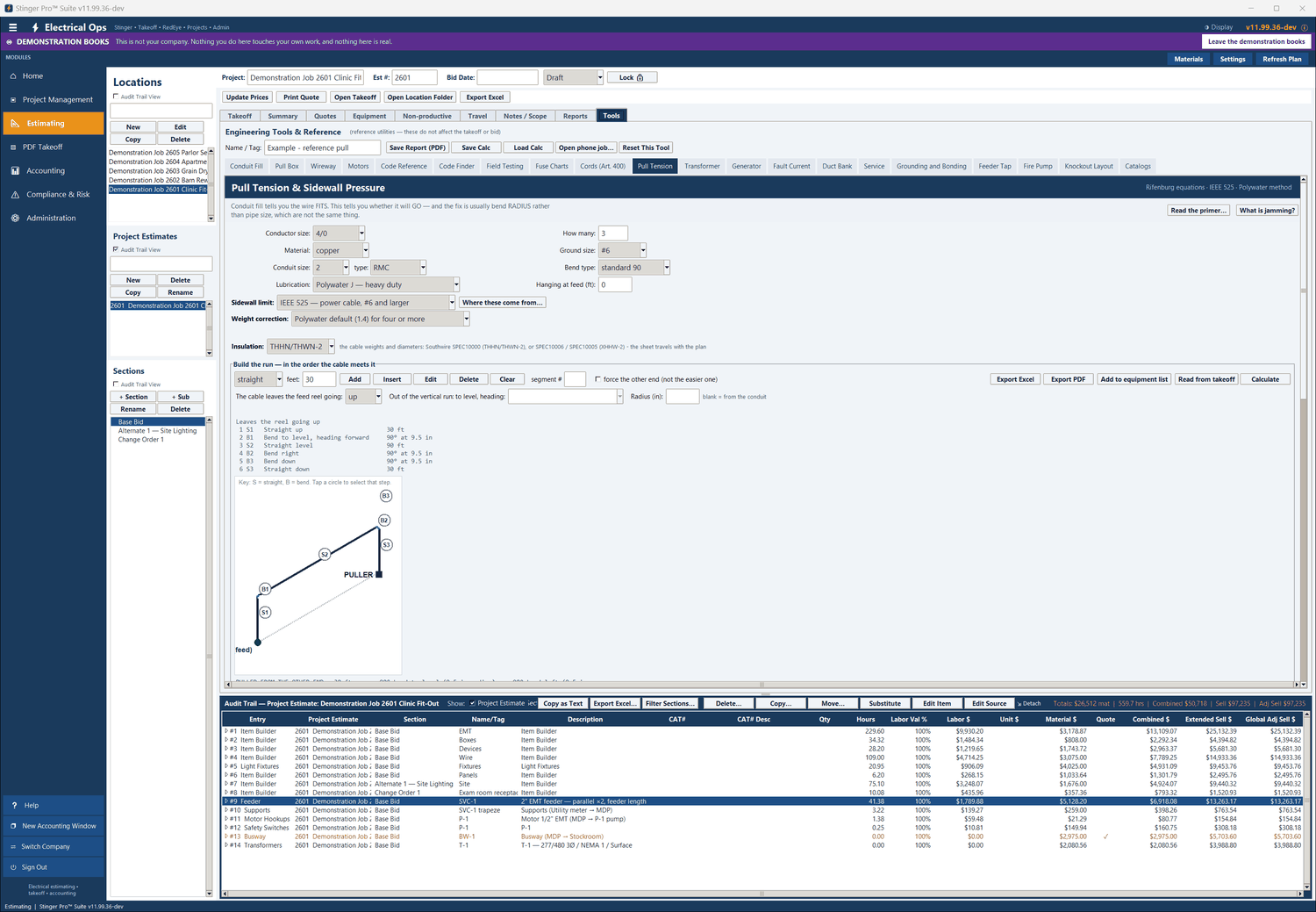
STEP 1 OF 4The example in, before it is worked out: three 4/0 copper and a 6 AWG ground in 2 in RMC, Polywater J, and a six-step run with three 90s at 9.5 in.
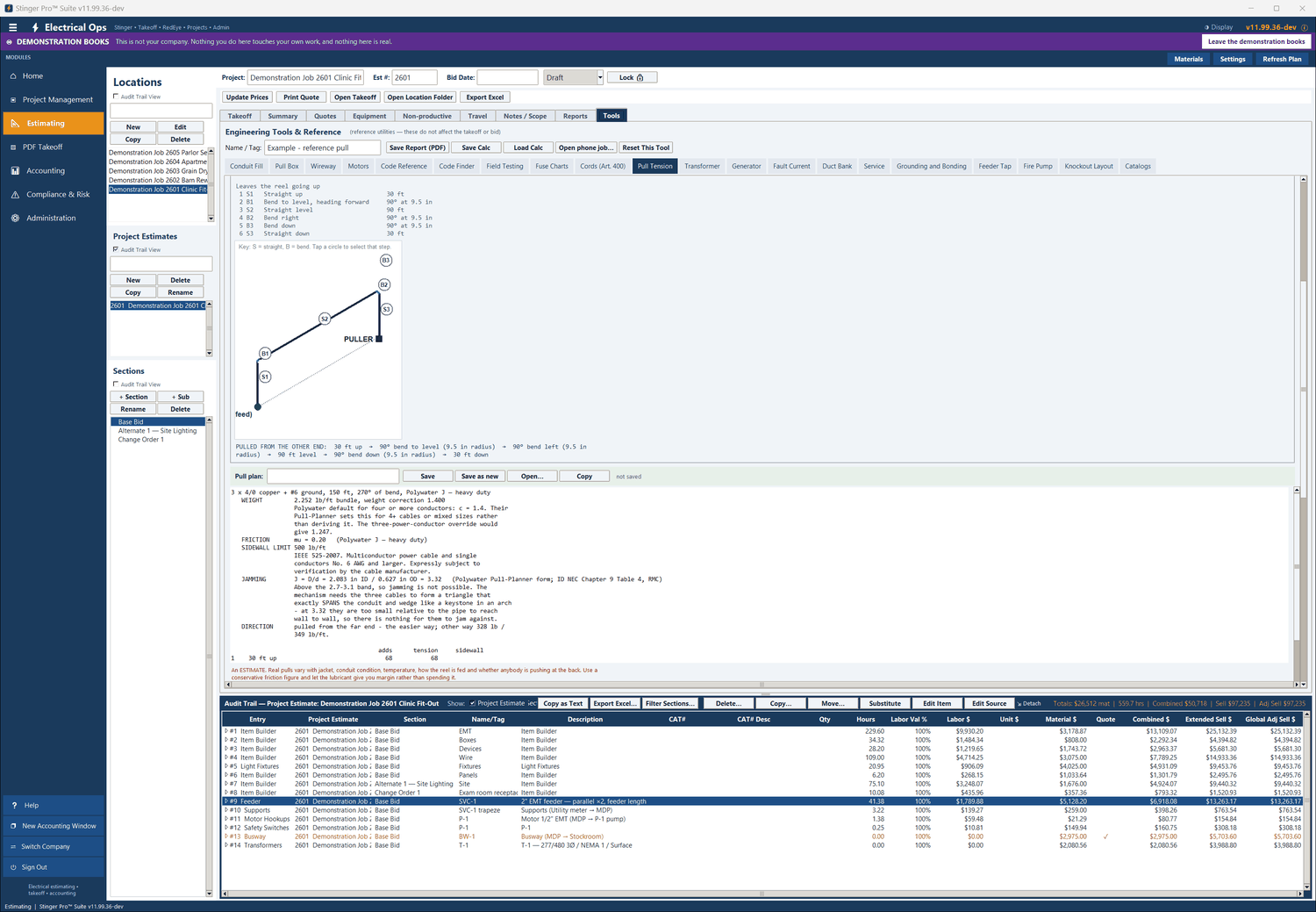
STEP 2 OF 4Worked out: pulled from the other end. The pull plan: 2.252 lb/ft bundle, weight correction 1.400, mu 0.20, 500 lb/ft sidewall limit, jamming ratio 3.32, other way 328 lb.
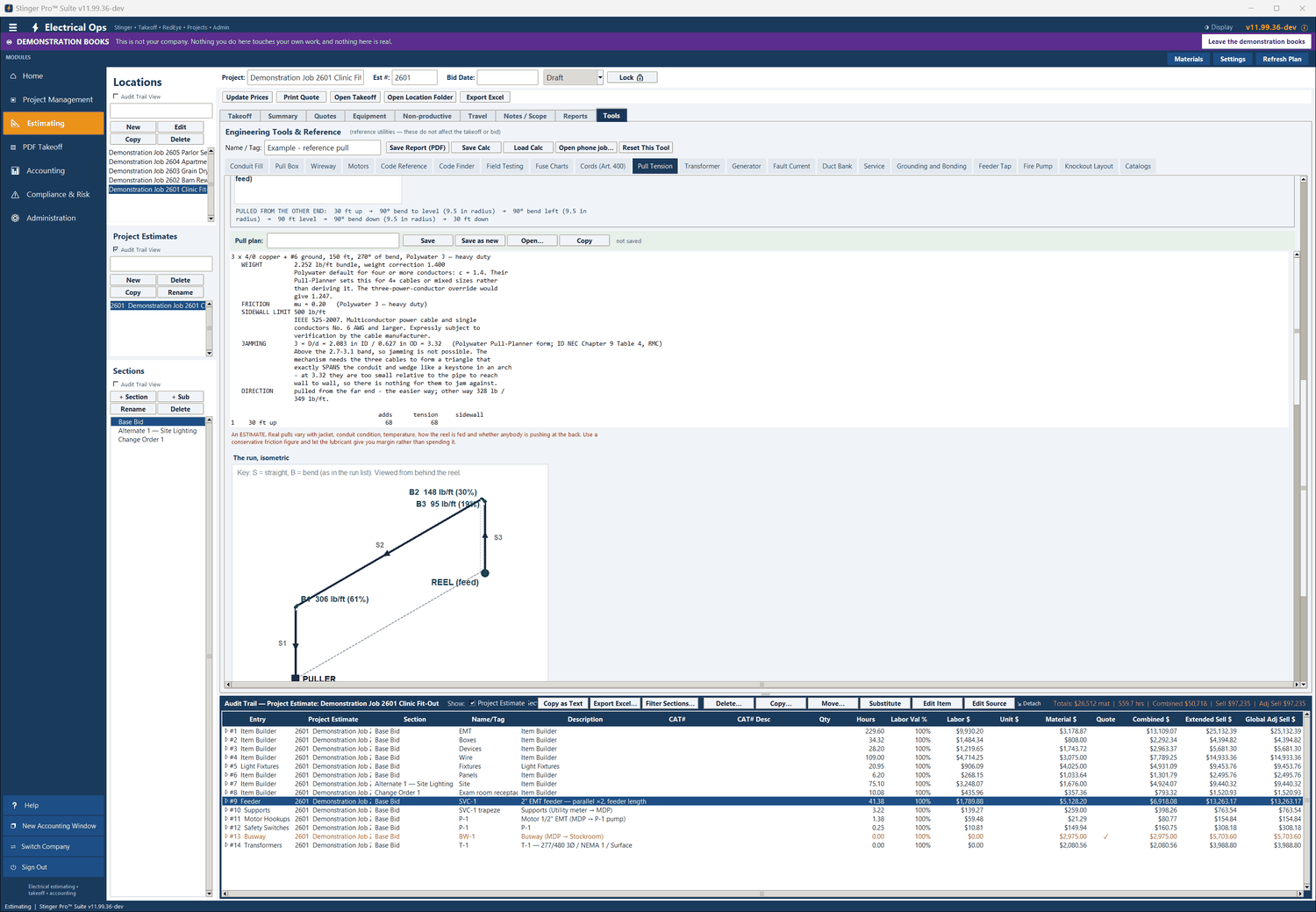
STEP 3 OF 4The run isometric from behind the reel, each bend with its sidewall pressure: B1 306 lb/ft (61%), B2 148 lb/ft, B3 95 lb/ft.
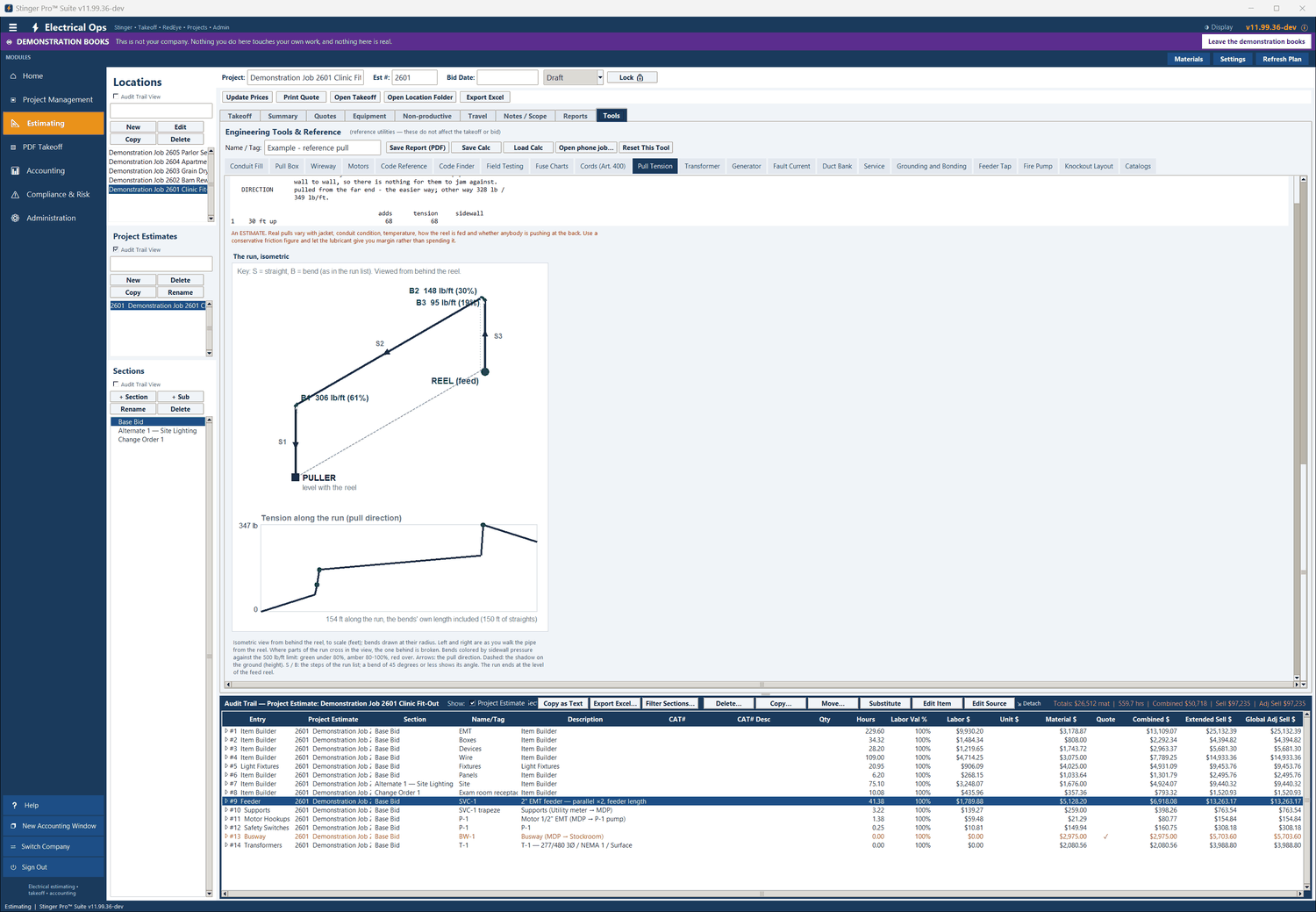
STEP 4 OF 4The tension along the run in the pull direction, up to 347 lb over 154 ft, under the isometric drawing.