Wireway takes the conductors and the number that carry current, and gives back the smallest standard wireway at 20% fill, the derating check, and the bending space to the opposite wall.
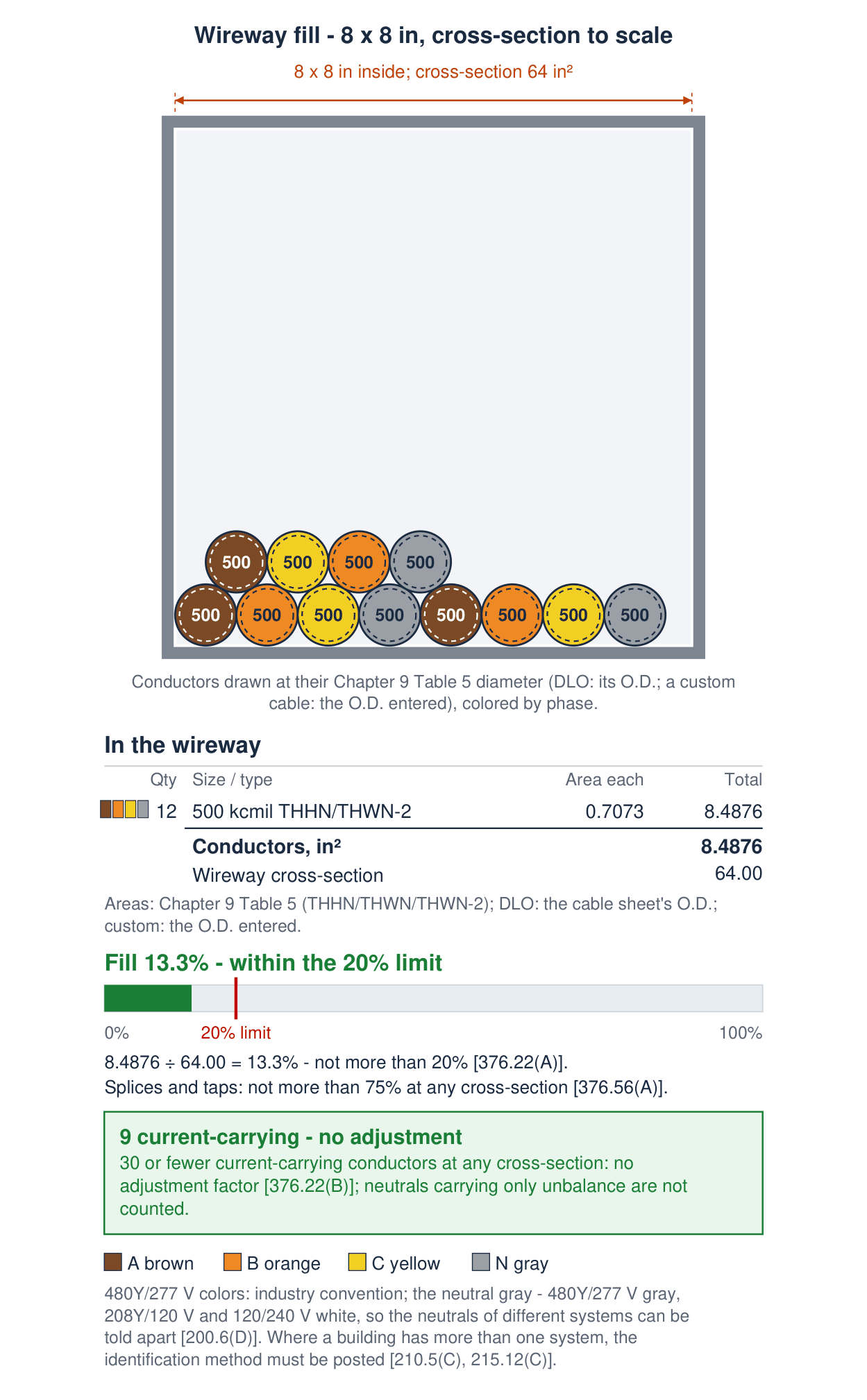
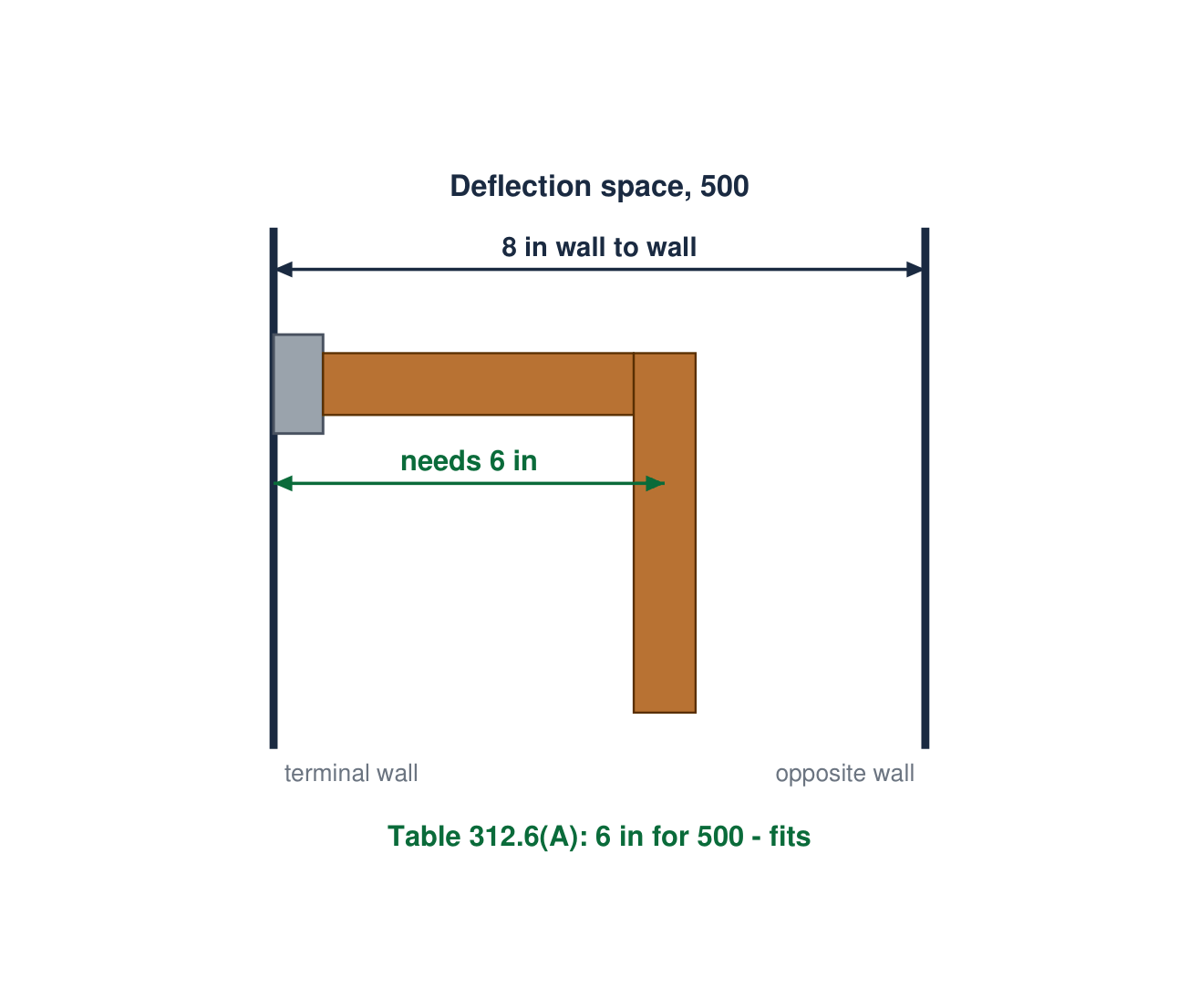
The wireway drawn to scale with its conductors colored by phase, and a side view of the bending space the largest conductor needs.
The report the Suite wrote for this example: three pages.
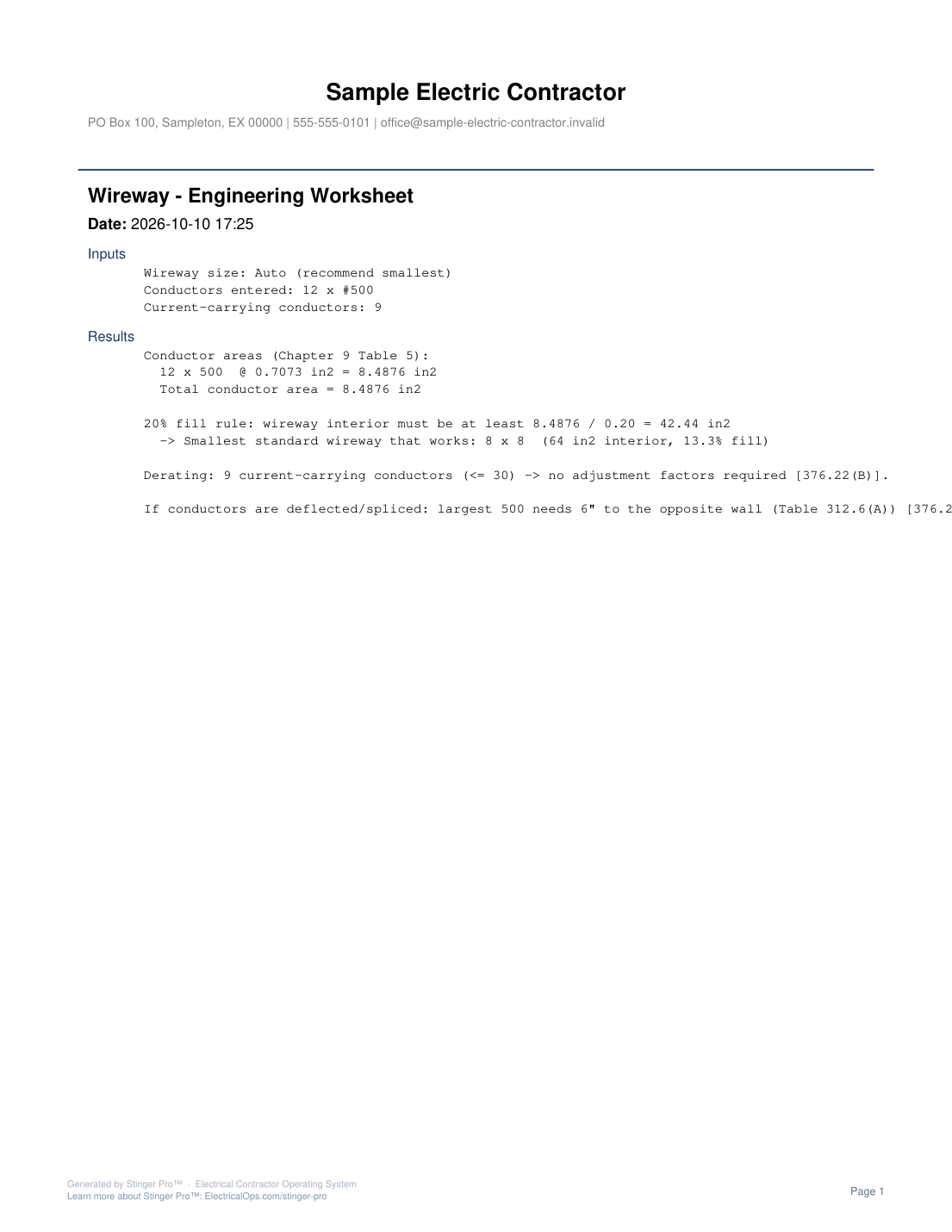
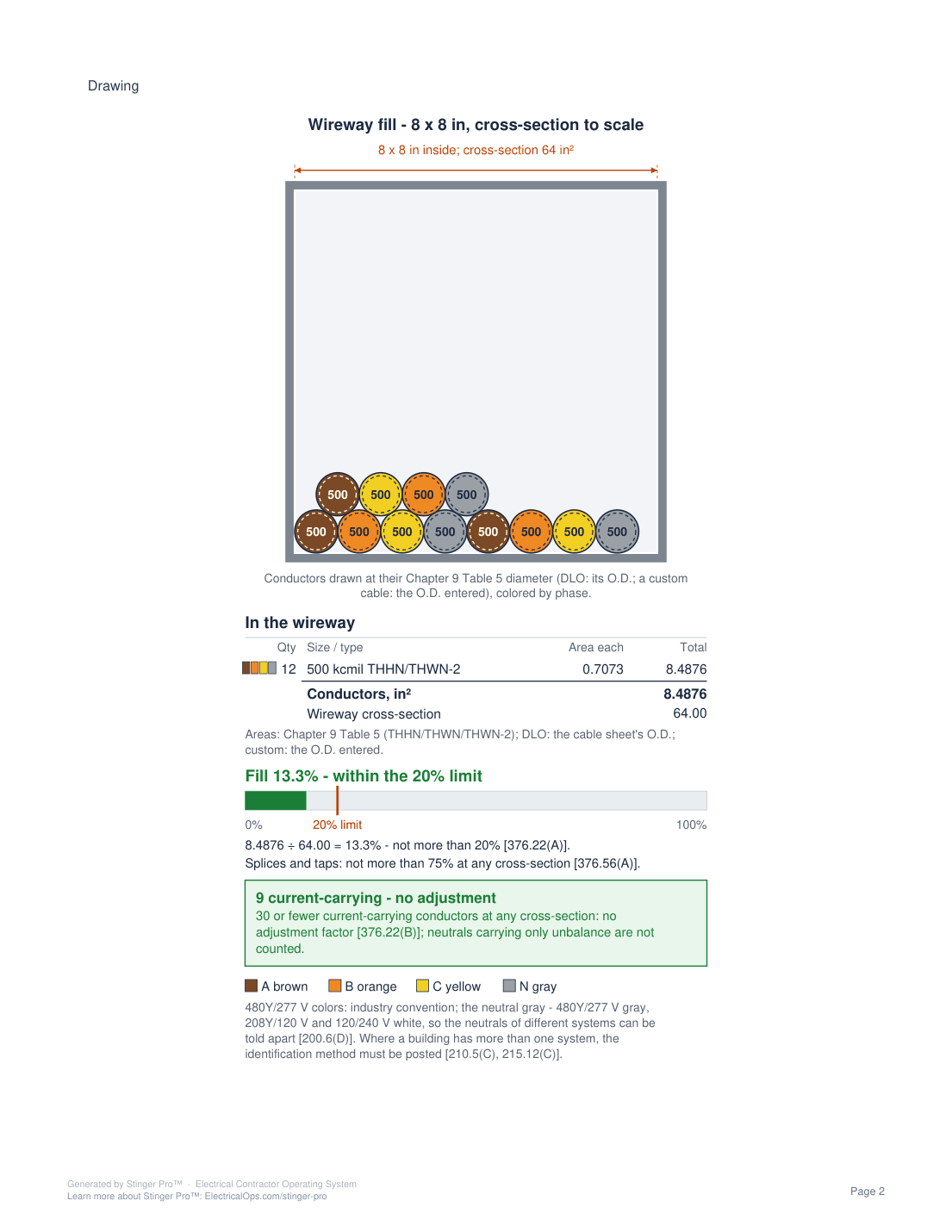
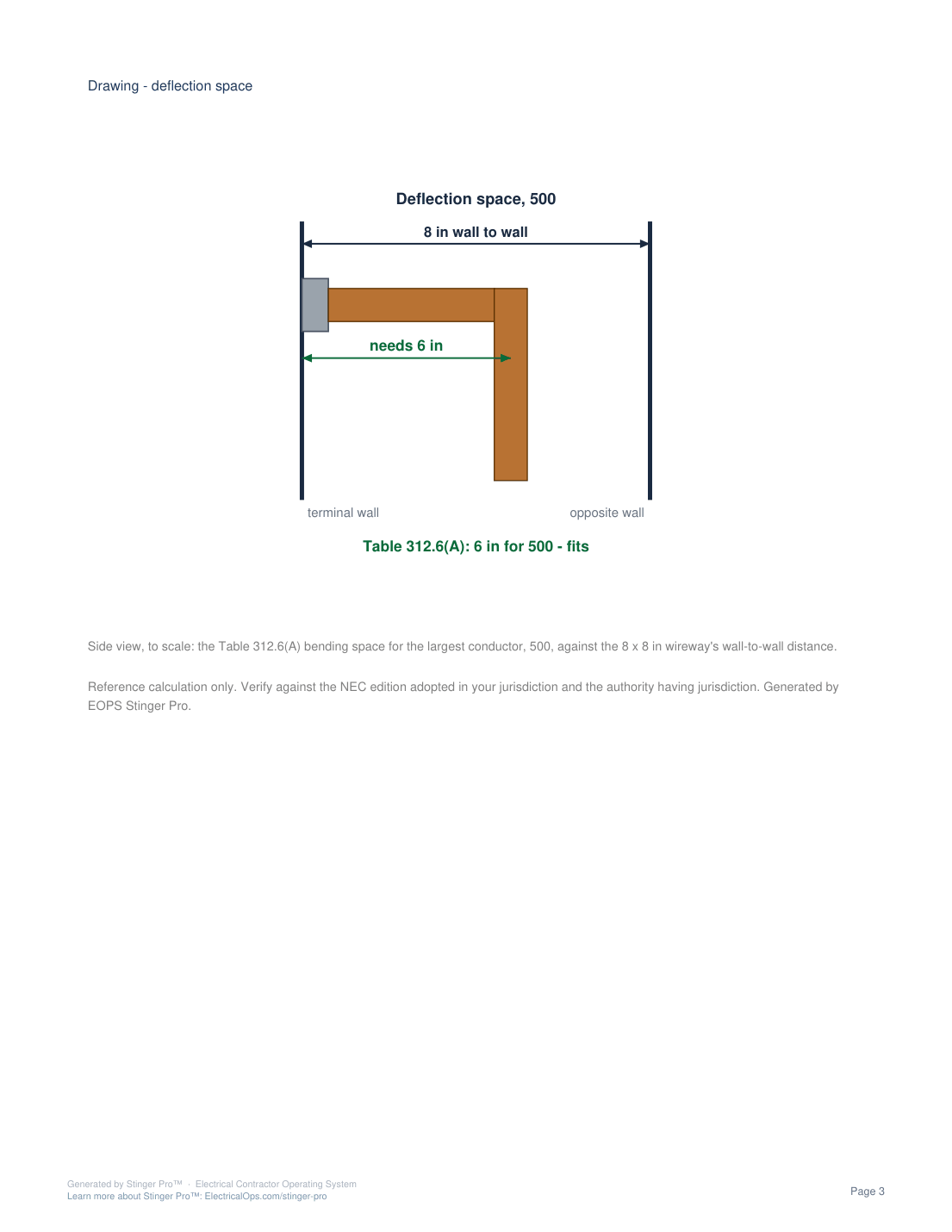
Page 1 is the work, from each conductor area to the smallest wireway that works; page 2 is the cross-section and fill; page 3 is the deflection space.
Entered by hand from the phone app's example.
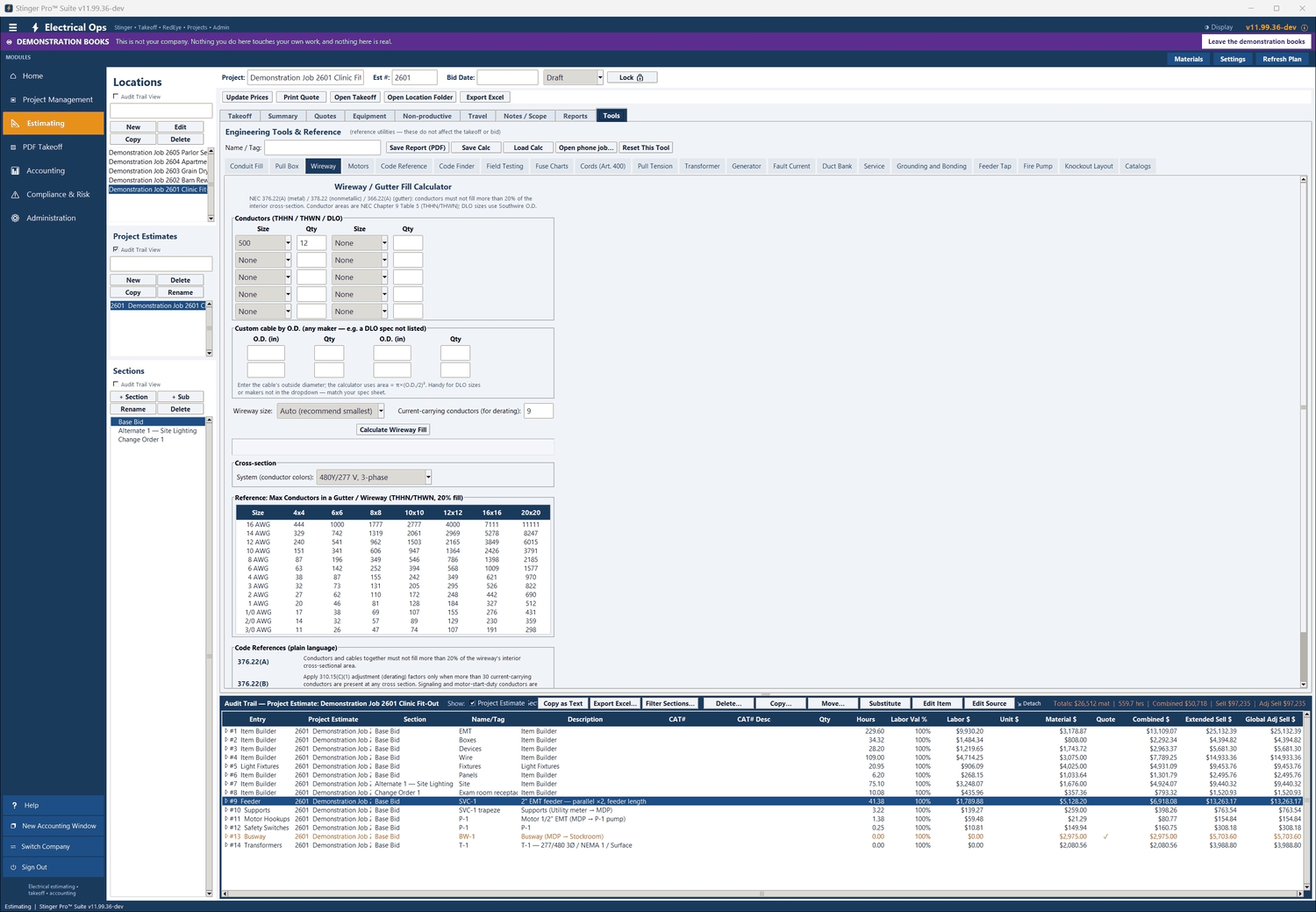
STEP 1 OF 6The example in, before it is worked out: twelve 500 kcmil, nine of them current-carrying, wireway size left on Auto, colors for 480Y/277 V.
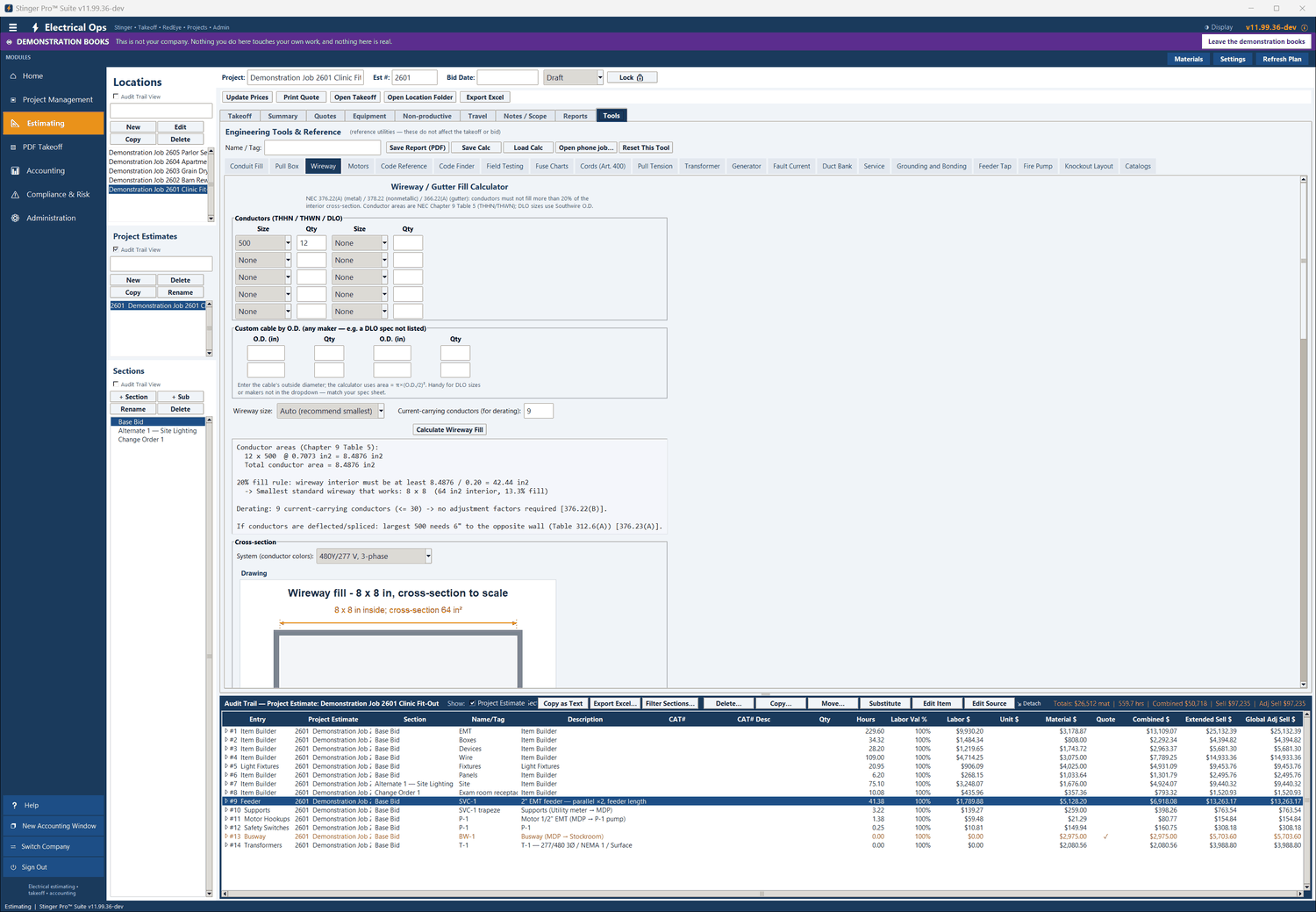
STEP 2 OF 6Worked out: 8.4876 sq in of conductor needs 42.44 sq in at 20%, so the smallest standard wireway is 8 x 8, 64 sq in, 13.3% fill.
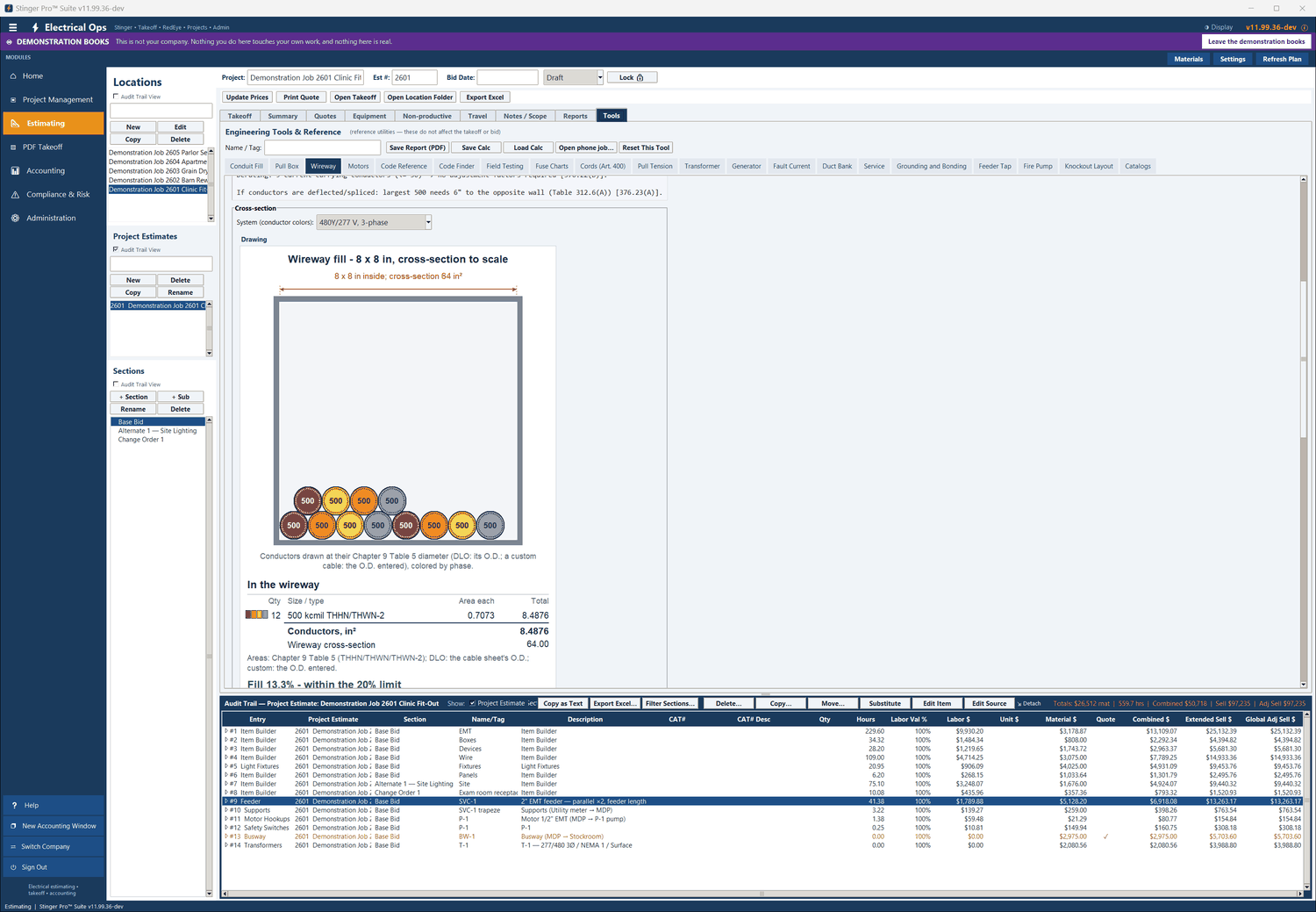
STEP 3 OF 6The cross-section to scale: the twelve 500 kcmil in the 8 x 8 in wireway, colored by phase, with the table of areas below.
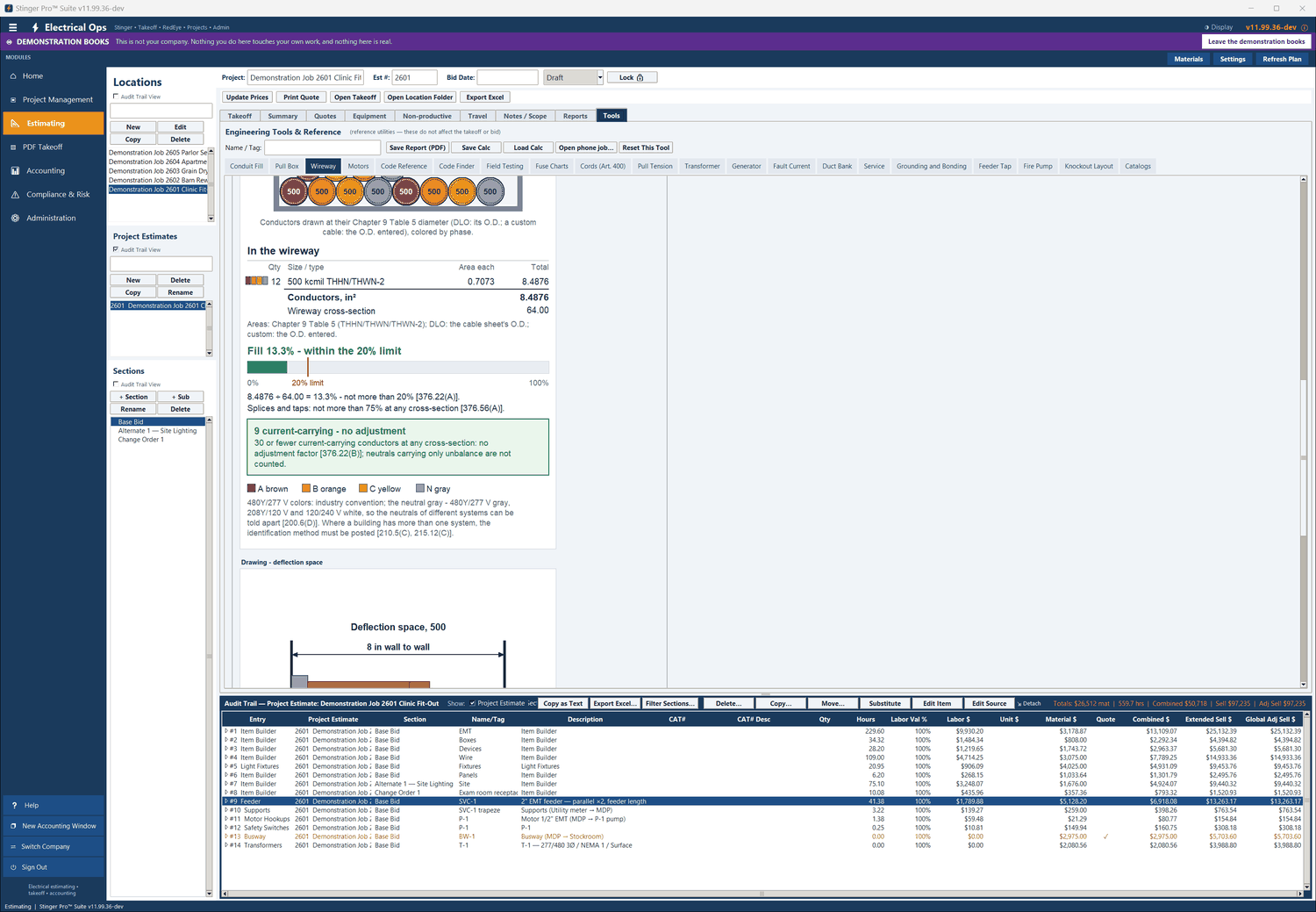
STEP 4 OF 6The fill bar at 13.3% against the 20% limit, splices and taps held to 75%, and nine current-carrying conductors: no adjustment.
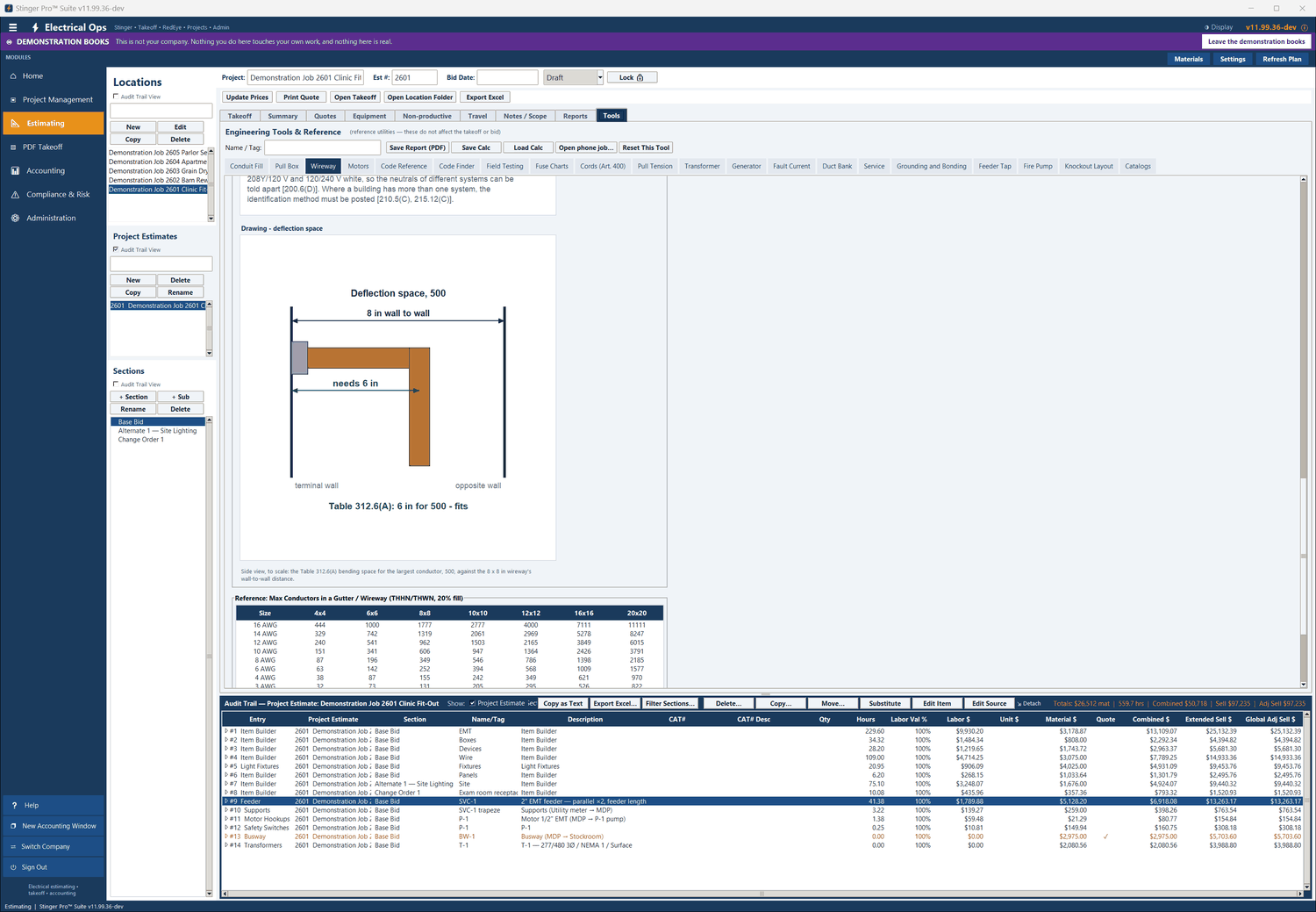
STEP 5 OF 6The deflection space: 500 kcmil needs 6 in to the opposite wall by Table 312.6(A); the wireway gives 8 in.
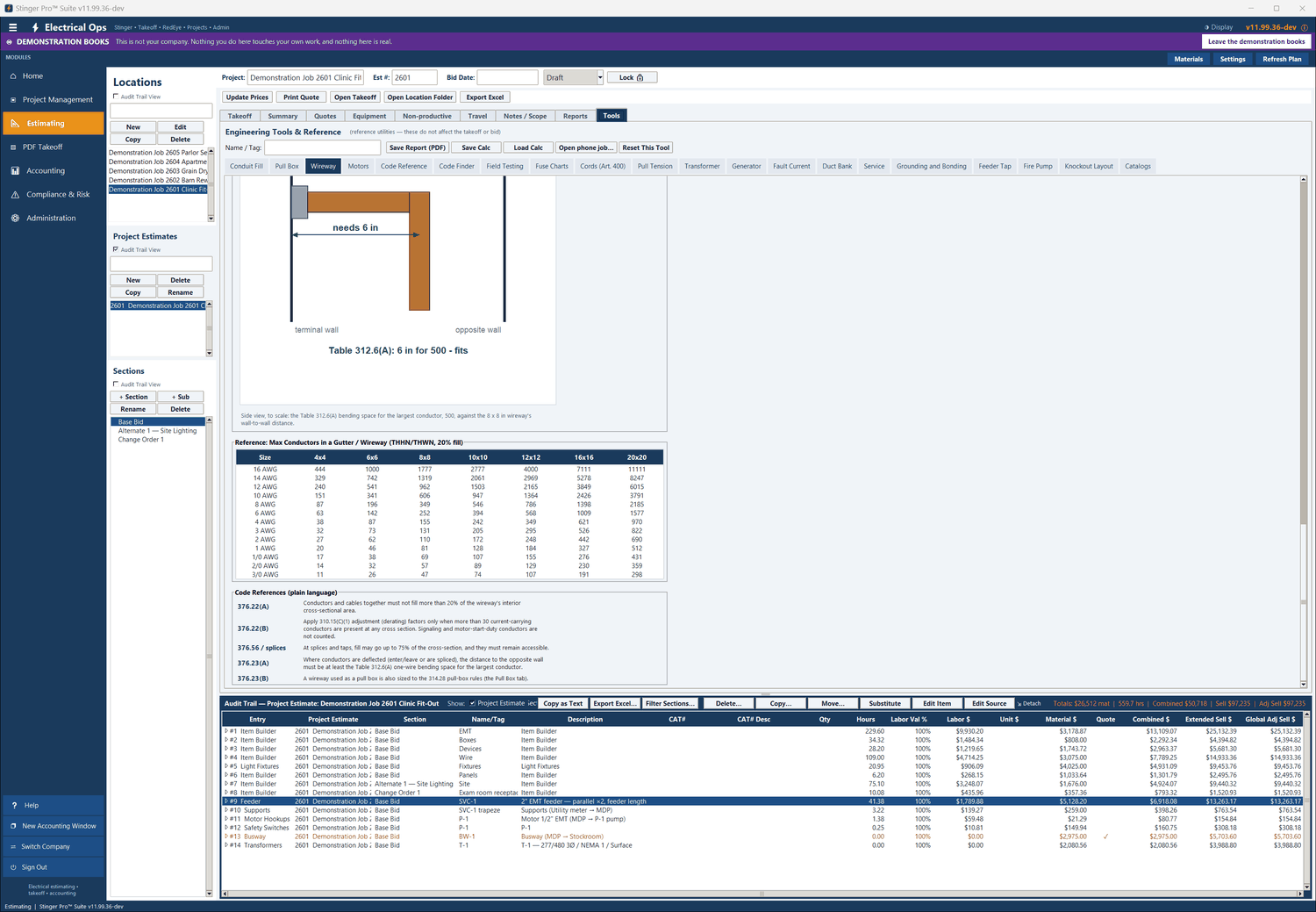
STEP 6 OF 6The reference table of the most conductors per wireway size at 20% fill, and the code references in plain language.
Opened from a takeoff entry, this tool sends its answer back into that entry: the three tools that do this.